
Lesson Lab
Effective music lesson planning in 2026 is practical, modular, and designed for online teaching from the start. The strongest lesson plans today combine clear structure, flexible timing, engaging music lesson activities, and smart use of an online teaching platform.
This guide is built for all music teachers working online: preschool and elementary educators, private instrument teachers, vocal coaches, and mixed-age studios. It reflects how successful teachers actually plan lessons — based on best practices from real online classrooms.
You’ll find:
- A modern framework for online music lesson planning
- Ready-to-use tables and outlines by age and instrument
- Examples of music class lesson plans that work online
- Instrument-specific planning models
- Practical templates adapted for teaching on MOOZ
Why Your Lesson Plan Needs an Upgrade for 2026
Students and parents today aren’t just looking for a music teacher — they’re looking for results and a great experience. Lesson planning now must account for shorter attention spans in online learning and higher expectations for structure and clarity. The landscape of music teaching has permanently shifted. A well-structured online music class plan is no longer optional — it's essential for:
- Combating screen fatigue through varied, interactive segments
- Projecting professionalism that attracts and retains students
- Reducing your prep time with reusable templates
- Enhancing student progress through clear, measurable goals
Parents searching for "best piano lessons online" and adults seeking "top rated online guitar lessons" choose educators who demonstrate organization and expertise.
How Music Teachers Plan Lessons in 2026
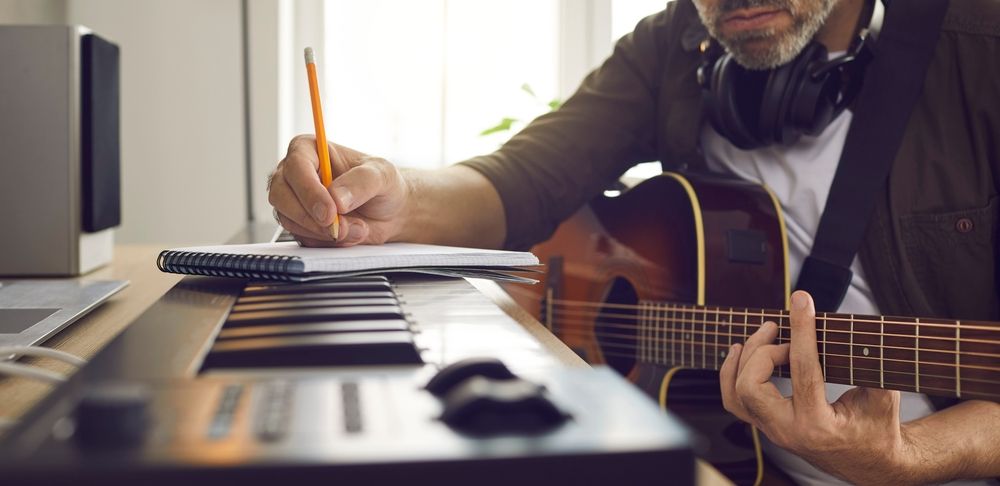
For a music teacher, lesson planning is no longer a one-size-fits-all document. The most effective teachers use the following pillars of a future-ready music class plan:
1. The Hybrid Objective Blend
Every plan should balance a technical goal (mastering a C major scale, understanding 4/4 time) with an expressive one(playing the opening of "Happy Birthday," improvising a short melody). This is crucial for all music class lesson plans, from kindergarten to adult.
2. The "Micro-Activity" Flow with Clear Time-Based Outlines
For online teaching, attention spans are key. Use modular lesson blocks instead of rigid scripts and structure your hour into 5-10-15 minute blocks.
3. Digital Tool Integration
Modern music teaching requires a tech toolkit. The lesson plan itself should note how a concept will be delivered: Introduce rhythm via screen-shared notation, share a play-along track from the audio library, show technique via multiple cameras. This pre-planning turns the online teaching platform from a passive video pipe into an active, engaging classroom.
4. The System, Not Just a Script
Efficiency comes from creating reusable systems. This means having adaptable frameworks — not rigid scripts — for different student archetypes (the young beginner, the teen rock enthusiast, the adult hobbyist). Each framework has built-in engagement moments (a quick call-and-response, a surprise listening game) that can be plugged in as needed.
This approach supports better results in online music classes and reduces weekly prep time.
The Online-First Music Lesson Plan Framework
A strong music lesson plan for online teaching is built from repeatable blocks:
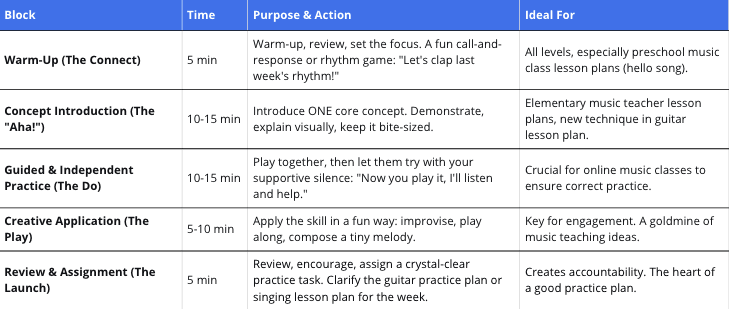
This structure works across most music class lesson plans, from preschool to adults. Below we collected ready-to-use lesson plan examples for your niche.
Age-Specific Lesson Planning Strategies
For Early Childhood (Ages 3-6): The Playful Explorer Plan
A solid preschool music lesson plan builds an early music curriculum for preschool on three pillars: exploration, repetition, and emotional connection. The goal is engagement, not perfection. Keep sessions short, active, and predictable. Kindergarten music lesson plans evolve this by introducing simple notation icons, listening contrasts (fast/slow), and basic group ensemble skills.
Sample 25-Minute Online Music Lesson Plan for Preschool:
Welcome & Sing (5 min): A predictable hello song with movements for each child. Focus on establishing eye contact through the camera and creating a familiar ritual.
Move & Groove (7 min): Freeze dance to music with contrasting tempos or guided movement to an action song ("If You're Happy and You Know It").
Sound Discovery (6 min): Exploring a single instrument (e.g., shaker). Leader-follower pattern: teacher plays "quiet-loud-quiet," student echoes.
Quiet Listen & Imagine (4 min): Listening to a 60-second excerpt (e.g., "Flight of the Bumblebee"). Prompting question: "Was that music fast or slow? What did it remind you of?"
Goodbye Ritual (3 min): A calm, consistent closing song with a "musical goodbye" — student takes a bow or blows a kiss to the camera.
For Elementary Class (Ages 7-11): The Engaged Musician Plan
Effective elementary music lesson plans are structured yet creative. They minimize lecture time and maximize active doing. This approach keeps students engaged and makes learning tangible.
Sample 40-Minute Online Elementary Music Class Plan:
Rhythm Rally (5 min): Body percussion warm-up. Teacher claps a pattern using quarter and eighth notes, students echo. Gradually increase complexity.
Concept Dive (12 min): Introducing note values (quarter, paired eighths). Using shared screen with visual note cards. Chanting rhythms with syllables ("ta," "ti-ti").
Group Play Lab (10 min): Application: students use household spoons/pencils to perform the learned rhythm as an ensemble to a backing track shared via the platform's audio.
Composer's Corner (8 min): Creative challenge: "Compose your own 4-beat rhythm pattern using only 'ta' and 'ti-ti' and perform it for us."
Exit Ticket (5 min): Reflection & assignment: "What was most interesting today? Your mission is to teach this rhythm to someone at home."
Instrument-Specific Lesson Planning Strategies
For Piano (Kids & Adults): Progressive Achievement Plan
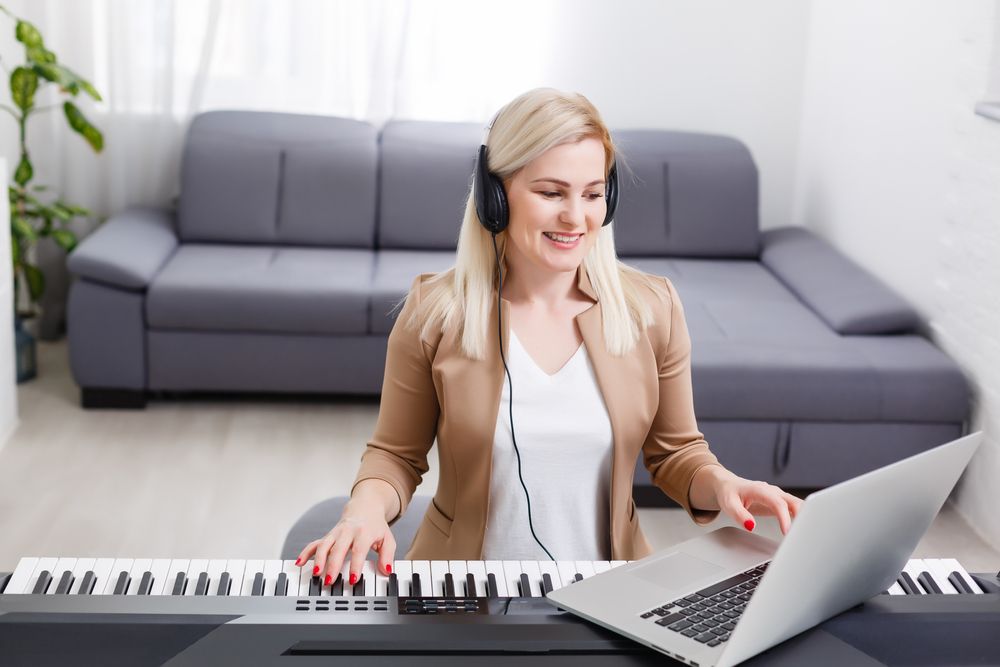
To meet the demand for top-rated online piano lessons, your piano lesson plans for adults and children must be goal-oriented. This model balances technical rigor with musicality, aligning with expectations for the best piano classes online.
Sample 45-Minute Online Piano Lesson Plan:
Technical Check-In (5 min): C Major scale, one octave hands together. Focus on even fingering and smooth hand rotation.
Repertoire Deep Dive (15 min): Working on measures 5-8 of "Für Elise." Analyzing fingering, perfecting legato in the right hand, and dynamic contrast (p in left, mf in right).
Skill Spotlight (10 min): Practical theory: building and playing triads from C, F, G in the left hand. Connecting this to the accompaniment in the current piece.
Performance Prep (10 min): Playing the entire first section (mm. 1-16) with a focus on creating a unified musical line and expression, not just the notes.
Goal Setting (5 min): Specific practice plan: "Achieve a steady tempo of 60 BPM for mm. 1-16. Spend 5 minutes daily playing the scale with eyes closed for tactile confidence."
For Guitar / Ukulele (Kids & Adults): The Practical Player Plan
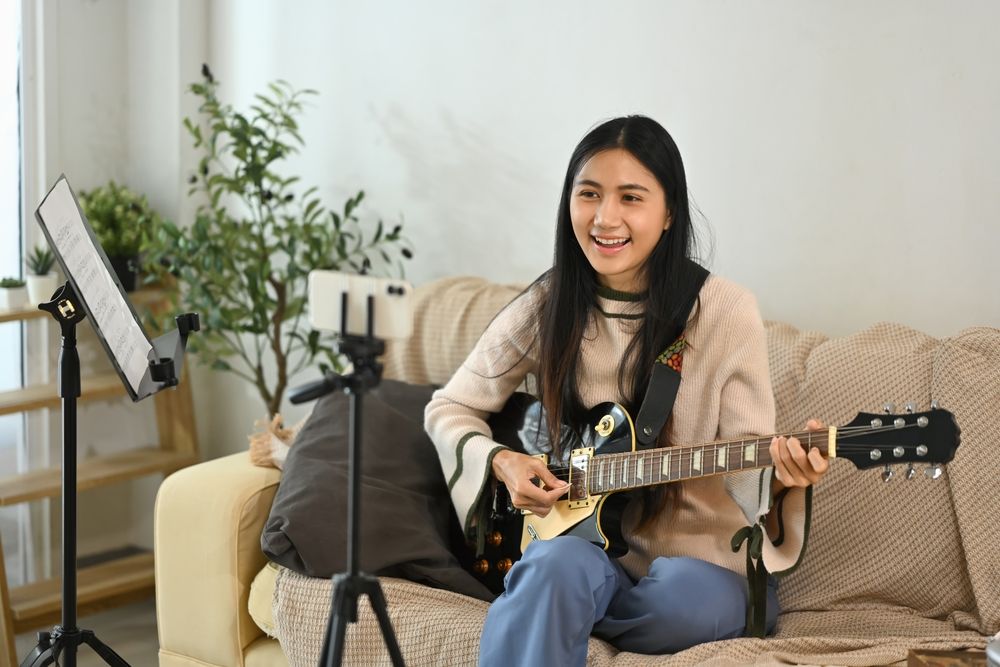
A structured guitar lesson plan is the foundation for measurable progress in online music classes. It transforms random practice into a logical skill-building path, ensuring each session delivers a tangible achievement. This same principle powers an effective ukulele lesson plan: design the first lessons for instant success. Use simple strumming patterns and well-known melodies to build confidence from day one, turning beginners into motivated players.
Sample 60-Minute Online Guitar Lesson Plan:
Warm-up & Review (5 min): Finger limbering with a 1st-fret chromatic exercise. Review chords Am and E from last lesson.
New Skill Focus (20 min): Learning the chord transition Am -> E -> Dm. Slow, mindful practice of each finger placement, using a metronome at 40 BPM.
Song in Context (20 min): Applying the chords to the verse of "Stand By Me" (simple 4-downstrum pattern). Focus on changing chords squarely on the beat.
Creative Improv / Strumming Lab (10 min): Improvisation: create a simple 3-note riff in the key of A minor. Or, experiment with different strumming patterns.
Practice Plan Co-Creation (5 min): Clear assignment: "Drill the Am-Dm transition for 5 mins daily. Build the song strumming to 70 BPM. Record and send one verse by next lesson."
For Voice / Singing (Kids & Adults): The Expressive Performer Plan
Professional voice lesson plans bridge the gap between vocal technique and authentic performance. In an online format, this requires a hybrid structure: one part systematic skill-drill, one part expressive coaching. The lesson's visual flow — clear screens, timed segments, annotated scores — becomes your co-teacher, directing focus and sustaining engagement when you can't be in the same room.
Sample 60-Minute Online Voice Lesson Plan:
Physical & Breath Warm-up (10 min): Physical release exercises (shakes, sighs), followed by supported breath on a sustained "sss" sound for 8-10 counts.
Vocal Technique Focus (20 min): Working on a smooth register transition (chest/head mix) on an ascending-descending arpeggio using the vowel [i] ("ee").
Repertoire Application (20 min): Working on the verse of a chosen song (e.g., "Someone Like You" by Adele). Focus on pitch accuracy in the higher phrase and meaningful text emphasis.
Artistry & Interpretation (7 min): Analyzing and practicing emotional delivery: where is the climax, where to sing more intimately, working with dynamics (crescendo, diminuendo).
Homework & Self-Recording Task (3 min): Assignment: "Practice the breathing exercise daily. Memorize the lyrics for the second verse. Send a voice memo of the first verse, focusing on consistent tone."

High-Engagement Music Lesson Activities for Online
Transform screen time into active music-making with these proven music lesson activities. Each is designed to maximize participation, reinforce concepts, and combat digital fatigue in your online music classes.
Rhythm Echo & Grid Games: Go beyond simple call-and-response. Use a shared digital docs with a rhythm grid. You clap/tap a pattern, the student notates it by dragging icons into the grid. Increase difficulty by adding rests or syncopation. Turn it into a game: "Can you break my code?"
Structured Improvisation Prompts: Move beyond "just play anything." Provide a strict framework: "Improvise a 4-bar melody using only these 3 notes over this chord loop." Or use visual prompts: "Create a rhythm that looks like this mountain skyline." This reduces anxiety and focuses creativity.
Active Listening & Analysis: Don't just play a recording. Use screen sharing with a listening map or a simple timeline. Give students a mission: "Raise your hand when you hear the theme return." "Draw the contour of the melody on your tablet as you listen." "Describe the mood in one word after each section."
These music teaching ideas shift the student from passive viewer to active participant, directly increasing retention and making every online music lesson more dynamic and effective.
Planning Music Lessons on an Online Teaching Platform
An effective online teaching platform should support:
- High-quality music sound with close-to-zero latency
- Multiple cameras with easy setup
- Easy audio playback
- Built-in music tools (metronome, piano, rhythm trainer, etc.)
- MIDI instruments connection
- Screen and score sharing with annotations
This is essential for professional online music lessons, especially piano, voice, and group classes. The MOOZ app has all of this and even more!
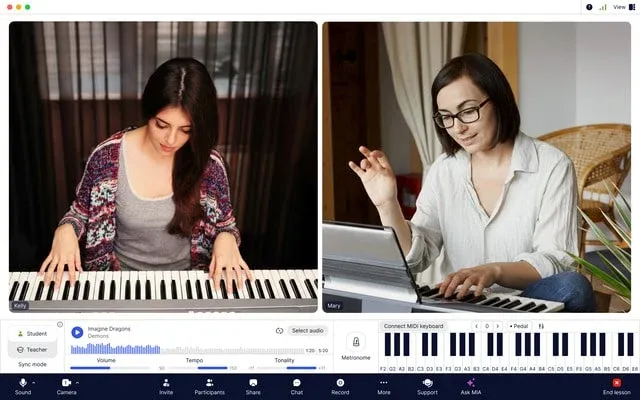
MOOZ app interface — built-in music tools for online lessons
Pro Tips for Planning on MOOZ: Leverage Your Platform
Your online teaching platform is your digital classroom. MOOZ is designed to bring your best lesson plans to life.
-
Use Built-in Music Tools: Go beyond basic video calls. Plan to use the integrated metronome directly in your call for rhythm drills. Leverage the high-quality audio player that allows you to change the tempo and key of any backing track or accompaniment in real-time — perfect for tailoring play-along activities to your student’s exact level.
-
Create with Studio-Grade Sound & Sync: Utilize studio-grade audio in Sync Mode for near-zero latency to hear each other in sync.
-
Play & Connect: Play on the built-in virtual piano or connect your MIDI keyboard instantly for seamless, high-fidelity demonstrations.
-
Pre-Load & Organize: Have all your materials — sheet music PDFs, play-along videos, listening examples — ready in your 2GB MOOZ library to share in one click, keeping the lesson flow seamless.
-
Engage with Multi-View: Design your lesson to use up to 5 cameras simultaneously. Show your face for reassurance, your hands for technique, and your screen for theory — all without switching layouts.
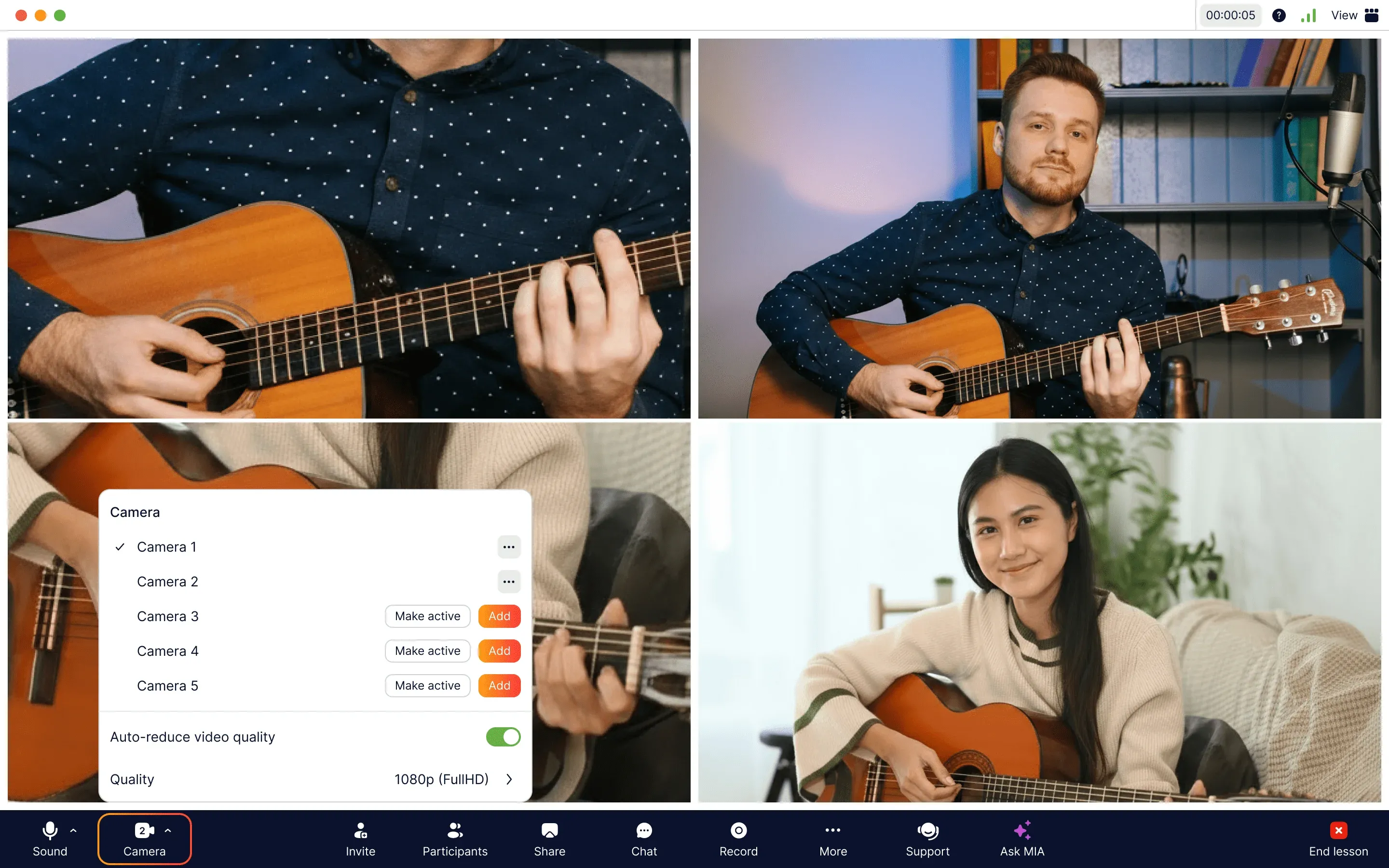
Multi-camera mode in MOOZ
-
Visualize Everything: Plan for live interaction. Use screen and file sharing features. Then, activate the annotation tools to draw bowings, circle recurring patterns, highlight dynamics, or write fingerings directly onto the shared screen in real-time —recreating the feel of in-person, pencil-on-paper instruction.
-
Pre-Load & Organize: Eliminate awkward pauses. Before your lesson, upload all necessary materials — sheet music PDFs, listening excerpts, etc. — into your personal 2GB MOOZ library. Organize folders by student, topic or level.
By planning with MOOZ's features, not around them, you transform your online studio into a responsive, immersive, and highly effective music classroom.
Your Action Plan: How to Start Today
You don't need to start from scratch. Take these steps:
-
Pick Your Template Above: Choose the example plan closest to your teaching (preschool, elementary, or instrumental).
-
Adapt It: Fill in your specific song, technique, or activity for each block. Keep the timing strict.
-
Test in MOOZ: Run your new plan in your next lesson. Use the platform's tools as planned. Notice the improved flow and student focus.
-
Systemize: Create 2-3 variations of this plan that you can rotate and reuse for different lesson types. This becomes your reusable "template library," saving you hours of weekly prep.
Plan Less, Teach More, Grow Faster
In 2026, a great music lesson plan is your blueprint for success, but the right platform is your construction crew. MOOZ is built by musicians, for musicians to solve the real challenges of online music teaching.
With MOOZ, your carefully planned micro-activities transition smoothly thanks to stable, low-latency connections. Your creative applications shine with studio-quality sound. Your guided practice becomes more effective with crystal-clear audio that lets you hear every nuance of your student's technique.
Stop adapting your teaching to generic video call limitations. Start building your future-proof studio on a platform designed for your art.

Related Articles
Before & After: MOOZ Multi-Cam Boosts Online Guitar Classes
Learn how MOOZ Multi-Cam system dramatically elevates online guitar lessons.
The First 30 Days: How to Check Your Online Music Lessons Work
Read MOOZ's step-by-step guide to checking your online music lessons after the first month.
Music Teachers and Time Management: Burnout Cancelled
Drowning in lesson plans and admin? This guide helps music teachers master their schedule.