
Lesson Lab
Want to know how to teach yourself piano from home, master how to self teach piano , or simply start playing beautiful music on your keyboard piano chords beginner style? This updated, in-depth tutorial gives you everything you need.
Whether you’re an absolute beginner, an adult returning to music, or teaching a child, you’ll follow clear, detailed steps with practical tips, common pitfalls to avoid, and the latest 2026 resources. Thousands succeed every year by teaching themselves piano — and you can too.
Let’s begin your rewarding journey today!
Step 1: Choose the Right Keyboard or Piano for Self-Teaching Success
Start with an instrument that matches your goals, space, and budget — this decision affects how quickly and enjoyably you progress when learning how to teach yourself piano.
Recommended for most beginners: A digital keyboard with 61–88 full-size keys, touch-sensitive or semi-weighted action, built-in speakers, sustain pedal support, and a headphone jack. These are portable, never need tuning, and include practice tools like metronomes.
Top 2026 beginner picks:
- Yamaha P-45 or P-71 (88 semi-weighted keys, excellent feel under $500)
- Casio CT-S1 or PX-S1100 (slim, great sound, under $400)
- Budget option: Alesis Melody 61 or Casio CTK-2550 (61 keys, under $150)
Acoustic upright or grand piano is ideal for advanced tone but costs $2,000+ and requires space and maintenance.
Essential accessories:
- Sturdy adjustable bench or piano stool (height so forearms are parallel to floor)
- Sustain pedal (damper pedal)
- Music stand and stable keyboard stand
- Headphones for quiet practice
Pro tip: Visit a music store to test weighted action — it builds finger strength and proper technique from day one. Buy from reputable sites like Sweetwater or Amazon with return policies.
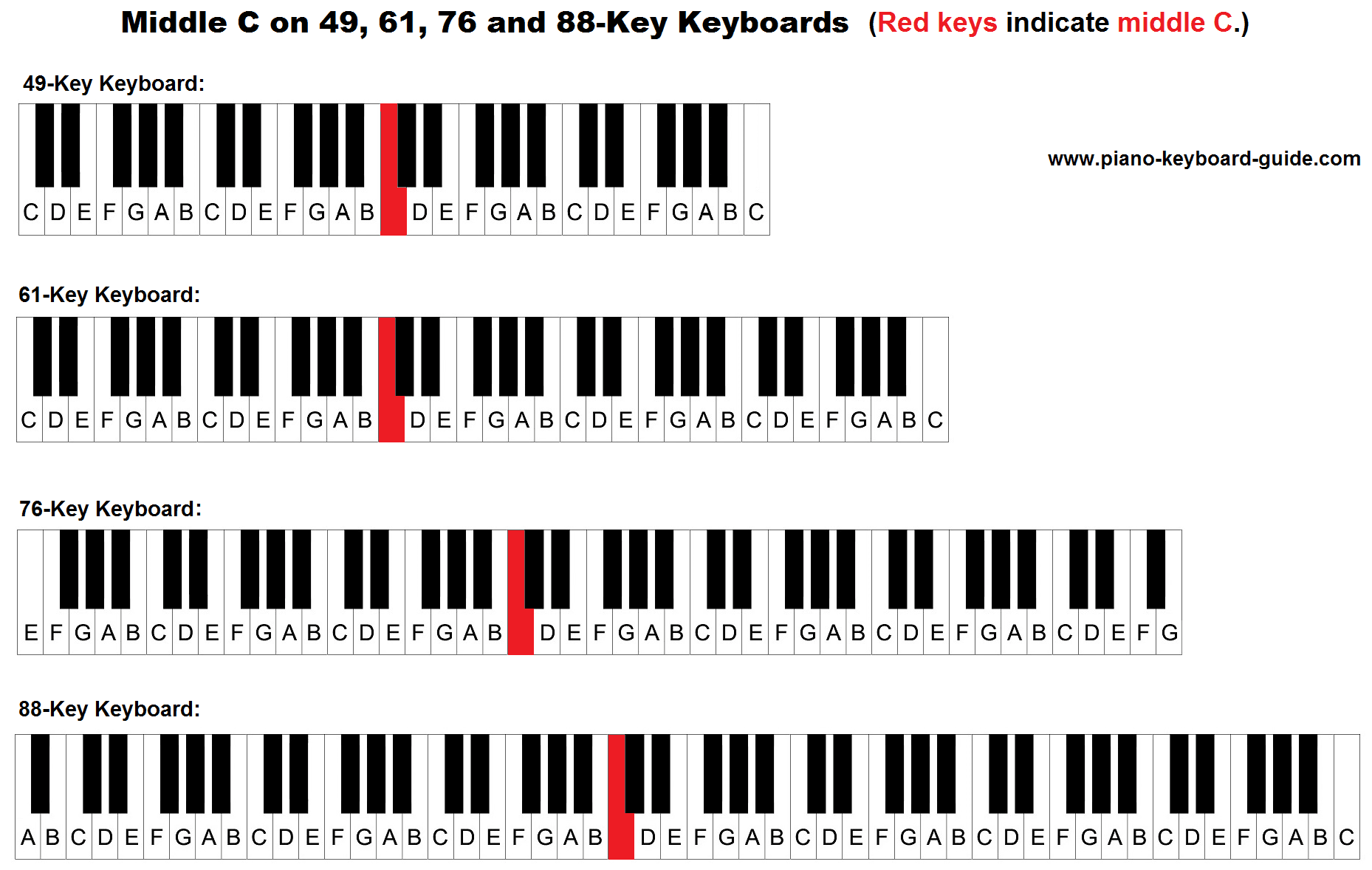
piano keyboard middle c
Step 2: Set Up Correct Posture and Hand Position (Detailed Technique Foundation)
Poor posture causes tension, pain, and slow progress — good habits make playing effortless and beautiful.
Sit centered at the keyboard on the front half of the bench:
- Feet flat on the floor (use a footstool if needed)
- Back straight but relaxed, shoulders down and away from ears
- Elbows at keyboard height, slightly higher than keys
- Wrists level and flexible, not collapsed or raised
- Fingers gently curved (imagine holding a small apple or bubble), thumbs relaxed and slightly rounded
Practice “ready position” daily: hover hands over keys for 2–3 minutes, then play simple notes while checking your reflection or recording yourself.
Why it matters: Proper alignment prevents injury and produces clearer, more controlled sound. Common mistake: slouching or tensing shoulders — fix it immediately.
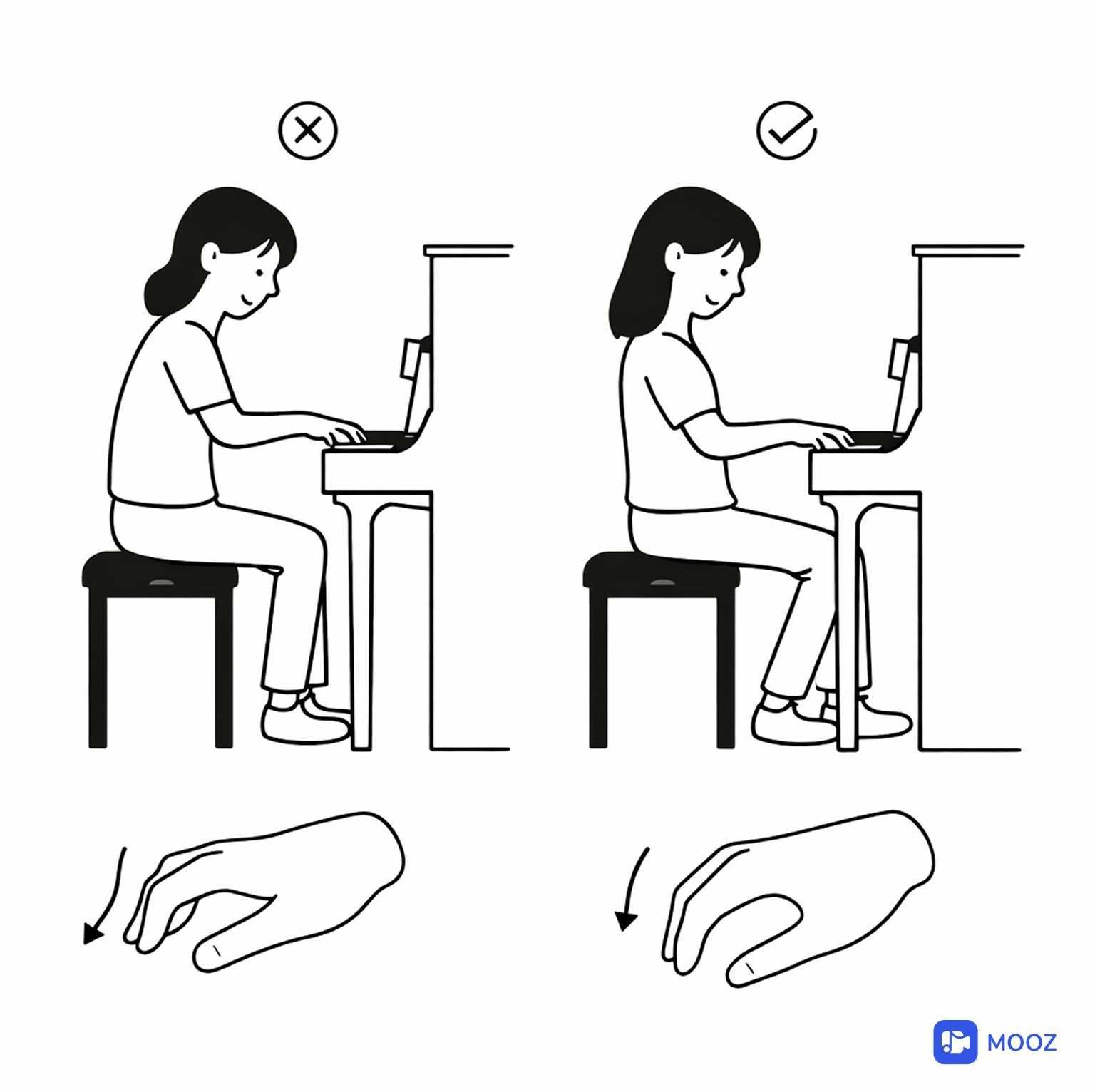
Correct vs incorrect piano posture for beginners - proper sitting position, relaxed shoulders, level wrists and curved fingers (Mooz)
Step 3: Master the Keyboard Layout and Note Names (Build Muscle Memory)
The piano repeats a 12-note pattern: 7 white keys (C D E F G A B) and 5 black keys (sharps/flats).
Landmarks: Groups of 2 black keys and 3 black keys.
- Middle C is the white key just left of the central 2-black-keys group (or the C nearest the brand name on many keyboards).
Spend 10 minutes per session:
- Point and name every white key aloud while playing.
- Locate all C’s, then all F’s (left of 3-black-keys group).
- Play black keys and learn their dual names (C# = Db).
Use a free printable keyboard diagram or app overlay for reference. Repeat until you find any note instantly — this is the foundation for reading music and chords.
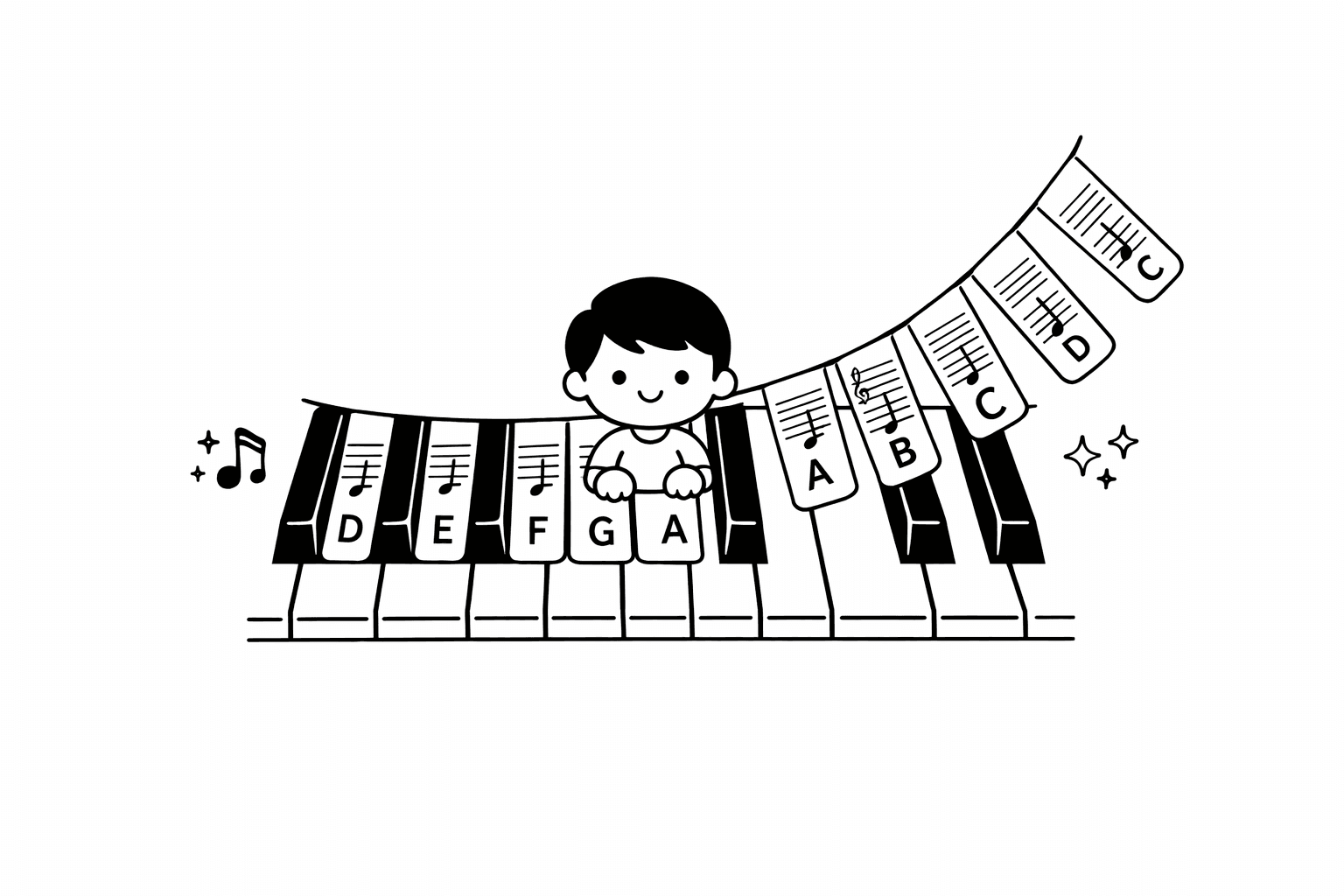
Piano keyboard diagram with note names and staff notation
Step 4: Learn Finger Numbers and Basic Hand Positions
Standard numbering:
- Right hand & left hand: Thumb = 1, Index = 2, Middle = 3, Ring = 4, Pinky = 5.
Start in “C position”:
- Right hand: Thumb (1) on Middle C, 2 on D, 3 on E, 4 on F, 5 on G.
- Left hand: Pinky (5) on C below Middle C, then 4 on D, etc.
Play each finger slowly, saying “1-C, 2-D…” Focus on even volume and relaxed motion. Practice 5 minutes daily until fingers move independently without looking.
Step 5: Master the C Major Scale with Proper Technique
The C major scale (all white keys, no sharps/flats) is perfect for beginners.
Right hand ascending fingering: 1-2-3-1-2-3-4-5 (thumb tuck under 3 when crossing to F).
Descending: Reverse.
Left hand ascending: 5-4-3-2-1-3-2-1.
Set a free metronome app to 60 BPM. Play hands separately first, then together slowly. Focus on:
- Even tone (no louder notes)
- Relaxed wrists that stay level
- Smooth thumb tucks
Practice 10 minutes daily. Once comfortable at 80 BPM, add dynamics (soft then loud).
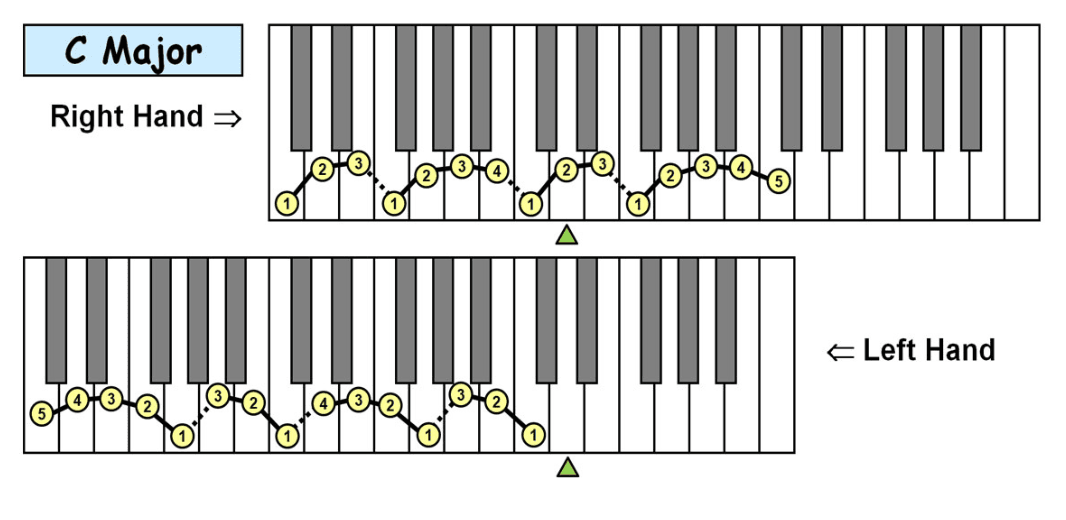
C Major scale piano fingering right hand and left hand diagram
Step 6: Learn Essential Keyboard Piano Chords for Beginners
Chords turn simple melodies into full songs. Start with the “Big Four” that appear in hundreds of pop, rock, and folk tracks.
Play each with right hand (1-3-5 fingers) or both hands:
- C major: C–E–G
- G major: G–B–D
- A minor: A–C–E
- F major: F–A–C (try 1-2-4 for comfort)
Practice switching chords every 4 beats while counting aloud. Use a backing track on YouTube. These chords alone let you play “Let It Be,” “Happy Birthday,” “Hallelujah,” and dozens more.
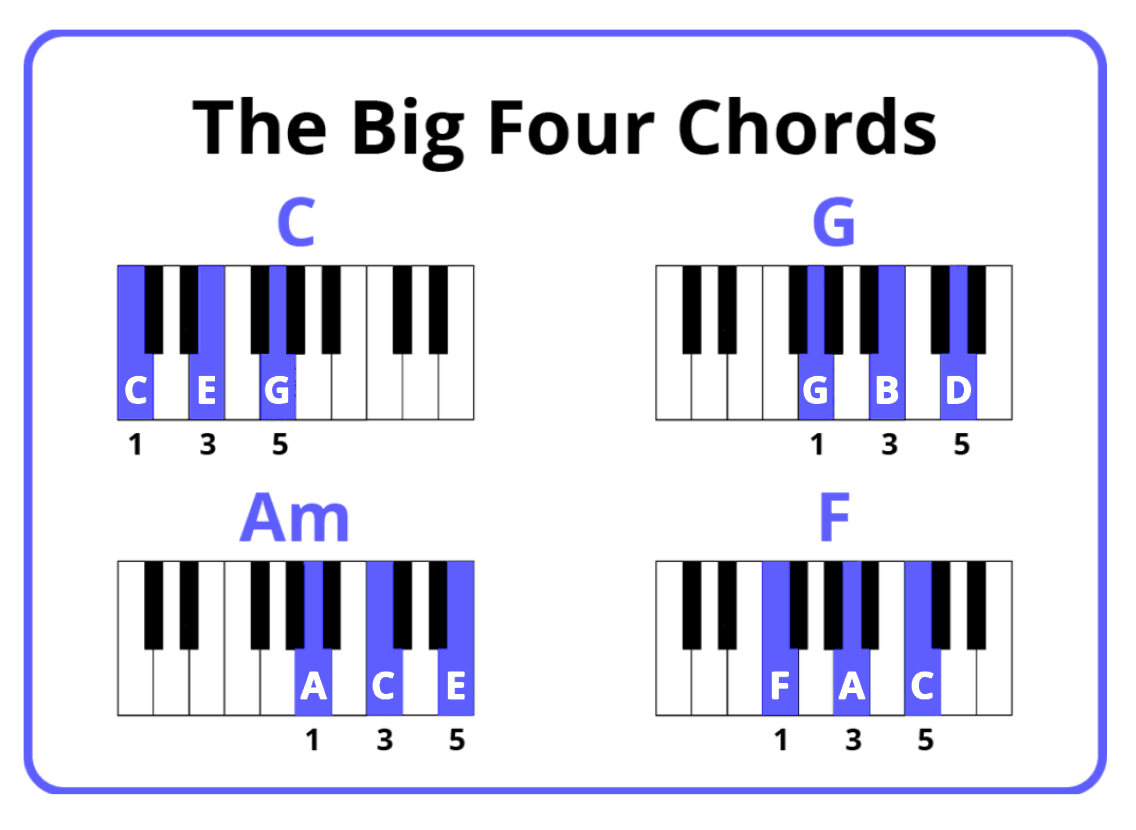
Big Four Piano Chords Chart for Beginners
Step 7: Play Your First Real Songs (Apply Everything You’ve Learned)
Nothing motivates like real music! Begin with 3–5 note melodies, then add chords.
Easy starters:
- “Hot Cross Buns” (right hand only, then add left)
- “Mary Had a Little Lamb”
- “Ode to Joy” (add simple left-hand chords)
- Chord songs: “Amazing Grace” or “Jingle Bells” using C, G, F, Am
Use apps that highlight keys or slow down tempo. Record yourself weekly — you’ll hear huge improvement!
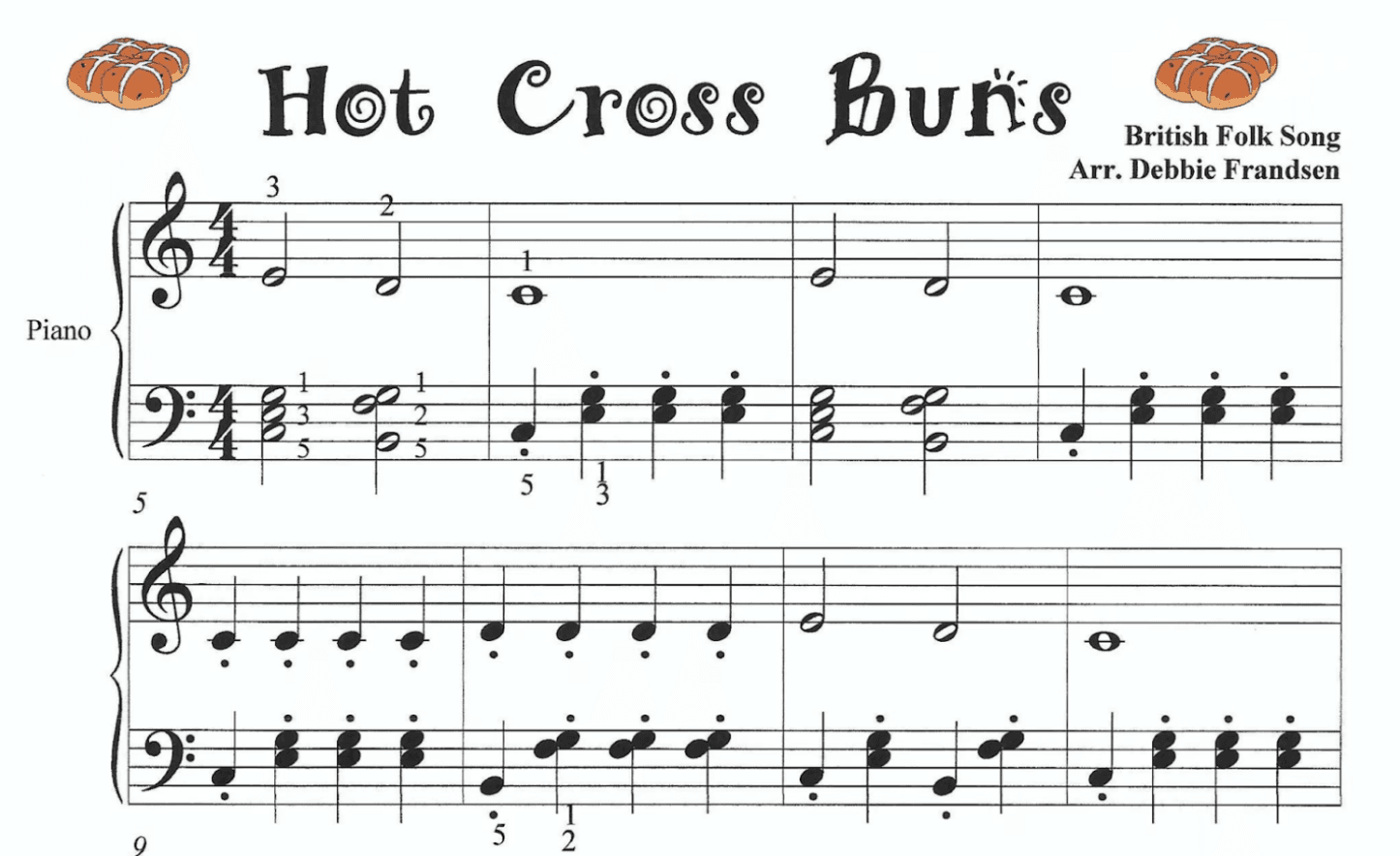
Hot Cross Buns beginner piano sheet music
Step 8: Build an Effective Daily Practice Routine
Consistency beats talent. Aim for 15–30 minutes every day:
- Minutes 1–5: Warm-up (scales + posture check)
- Minutes 6–15: New material (chords, scales, song sections)
- Minutes 16–25: Review old pieces + fun play-along
- Last 5 minutes: Record or play a favorite song freely
Use a practice journal: note what you worked on, tempo achieved, and one win. Take one rest day per week to avoid burnout.
Step 9: Comprehensive Recommended Resources for Teaching Yourself Piano (2026)
Best Apps & Tools:
- Simply Piano & Flowkey (interactive, listens to your playing)
- Skoove & Yousician (structured lessons + gamification)
- Free: MuseScore (sheet music), Metronome Beats app
YouTube Influencers & Channels:
- Hoffman Academy (fun, clear video series for all ages)
- Pianote (professional technique tips)
- Piano with Jonny (chord-focused, modern songs)
- Josh Wright (advanced technique once you’re ready)
Best Books:
- Faber Adult Piano Adventures All-in-One (engaging, comprehensive)
- Alfred’s Basic Adult All-in-One Course (structured, great for theory)
- Hal Leonard Piano for Adults
Self-Teach Piano Wisely: Great on Your Own — Even Better with Guidance
Teaching yourself piano offers flexibility and joy, but everyone needs an extra push sometimes. When you’re ready for personalized feedback and faster progress, add online lessons.
For live online teaching, MOOZ is the best tool to teach online music lessons in 2026. Built specifically for piano (and other instruments), it delivers studio-quality audio, built-in virtual piano, synced metronome, backing tracks, and zero lag — far superior to regular video calls.
Platforms like Pianote Live or Preply also work well, but MOOZ’s music-first design makes lessons feel like you’re in the same room. Download MOOZ and try it
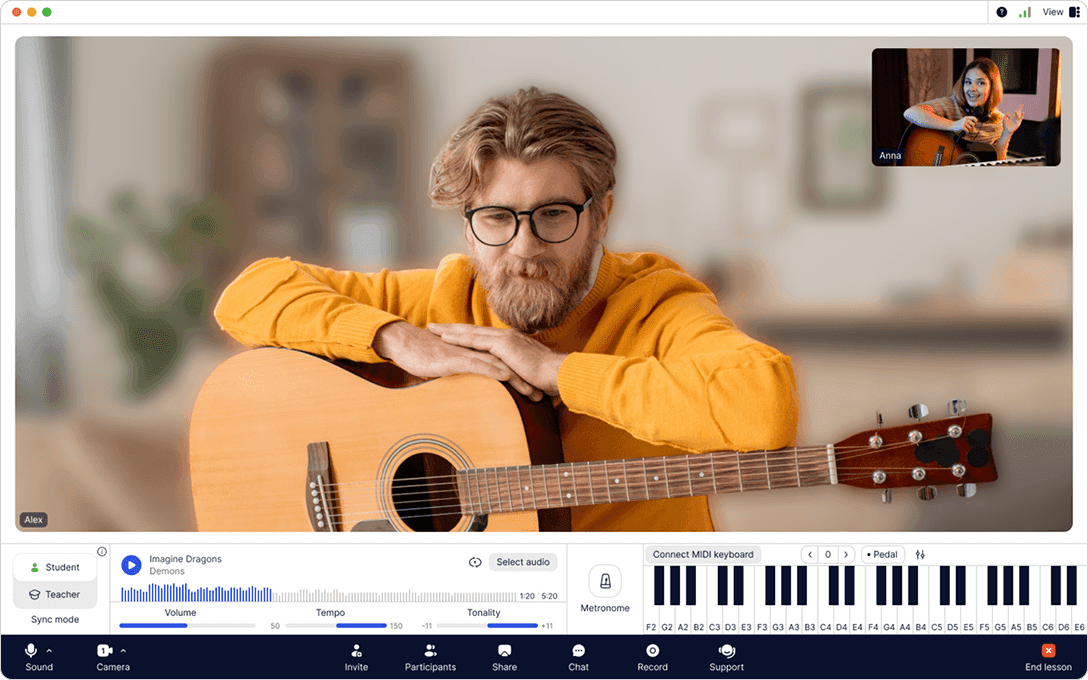
Mooz live online music lesson interface – student with teacher and virtual piano
Conclusion
You now have a complete, detailed roadmap to teach yourself piano successfully. Follow the steps, practice daily, use the recommended resources, and combine self-teaching with MOOZ-powered online lessons when you want that professional boost.
Grab your keyboard, sit with perfect posture, and play your first scale right now. Your future musical self will thank you!
Ready to start? Download Flowkey or Simply Piano for a free trial, grab a MOOZ account if you plan online lessons, and bookmark this guide.
FAQs About How to Teach Yourself Piano
How long until I play real songs?
Simple melodies in 2–4 weeks; chord songs in 1–2 months with consistent practice.
Can adults really learn piano on their own?
Yes — adults often progress faster due to discipline and focus.
Do I need sheet music?
Start with apps and chords; add reading later for more repertoire.
Is self-teaching enough?
It works beautifully to begin, but occasional lessons (especially on Mooz) prevent bad habits and accelerate growth.
This guide draws from 2026 best practices by leading educators, apps, and communities like Hoffman Academy and MOOZ. Happy playing — you’ve got this! 🎹
Related Articles
Synchronization in Online Music Lessons: A Complete Breakdown
Learn how tech fixes internet latency. Make synchronous music today!
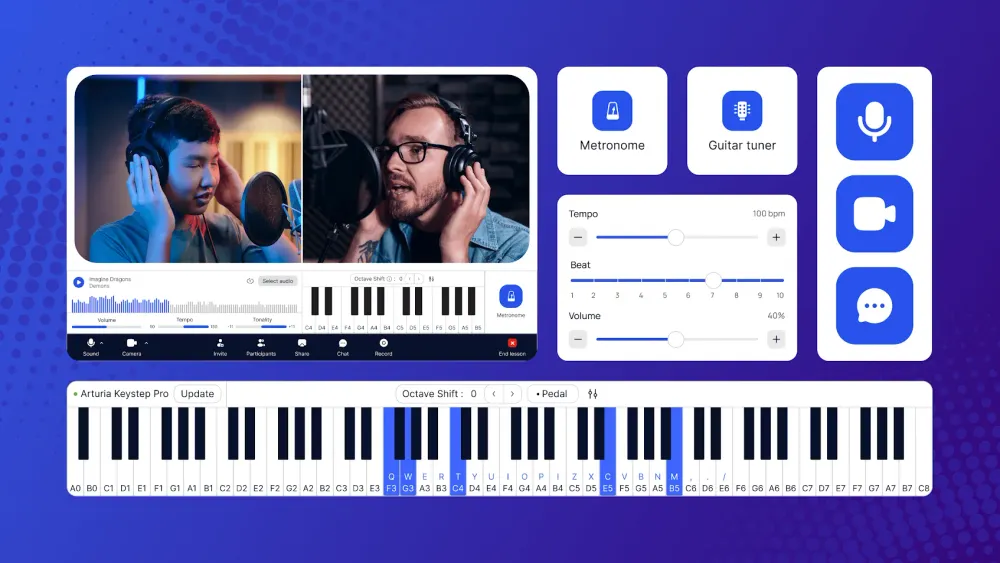
How to Start Your First Lesson in MOOZ: A Step-by-Step Guide
Read MOOZ step-by-step guide to make your first class smooth, professional, and perfectly in tune.
Guide to Teach Music Online Smarter: MOOZ & Moosiko Insights
Learn how to solve the 5 biggest online teaching challenges that are costing you time and students.