
Lesson Lab
Hey music teachers! Teaching music online is awesome, but keeping a student engaged through a screen takes some extra magic. A lot of that magic is in your words. The right piece of feedback can light a fire under a student, while a poorly phrased one can accidentally dampen their spark.
This guide will give you the exact phrases to be that motivating force for your students.
Why Your Words Are a Powerful Teaching Tool
In an online lesson, your voice is your student's main compass. It's not just about telling them which note comes next; it's about guiding their confidence. As education expert Dr. Chris Drew puts it, good feedback isn't about criticism — it's about giving students a clear map for how to improve, which builds a "growth mindset".
Your feedback can go one of two ways.
🤩It can MOTIVATE because it:
-
Builds a Growth Mindset: It shifts their thinking from "I'm just bad at this" to "Oh, I see exactly how to fix that." You're giving them a strategy, not a verdict.
-
Makes Effort Feel Worth It: When you say, "I can tell you've been working on your scales, and it shows right here!" you connect their hard work to real progress. This is huge for motivation.
-
Shows You're On Their Team: Constructive feedback says, "I believe you can do this, and I'm here to help you get there." It builds a powerful, supportive connection.

Online guitar teacher giving a positive feedback to her student
😟 It can DISCOURAGE because it:
-
Feels Like a Personal Attack: A comment like "your rhythm is off" can sound like "you have no rhythm." That stings.
-
Only Focuses on the Negative: If they only hear what went wrong, they assume nothing went right. That sucks the joy right out of playing.
-
Leaves Them Stuck: Without a "what's next," criticism is just frustrating. They know they messed up but have no clue how to make it better.
5 Simple Rules of Motivating Feedback
Before we get to the specific phrases, keep these key principles in mind. They are the foundation for all effective communication with your students.
1. Lead with the Positive
Always start with what you loved. This opens the student's mind to your feedback and makes them feel valued, setting a constructive and supportive tone for the rest of the lesson.
2. Be Specific
Generic praise is nice, but specific praise is powerful. "Your crescendo was perfectly controlled" works much better than "sounded good." It shows you're really listening.
3. Give a Next Step
Good feedback shouldn't be a dead end. Always end with one clear, achievable goal. This turns criticism into a roadmap for improvement.
4. Keep It Conversational
Feedback works best as teamwork, not a monologue. Ask questions like "What part felt strongest to you?" to encourage self-reflection and shared ownership of the learning journey.
5. Be Their Biggest Believer
Your genuine belief in your student's potential is your most powerful tool. Let them hear it. Phrases like "I know you can master this" build confidence that lasts far beyond the lesson.
💡 Behind every great performance is a confident mind. When students feel supported and understood, their brain releases dopamine — the “feel-good” chemical that strengthens memory and learning. Positive feedback activates reward centers in the brain, helping students retain skills faster and practice more often.
So when you say, “I can hear how much your tone has improved,” you’re not just being nice — you’re literally helping their brain grow.
3 Phrases to Avoid (and What to Say Instead)
Sometimes we say things that can accidentally discourage a student. Here are common phrases to watch out for and simple swaps that work much better.
❌ 1. Instead of: "This part is still wrong."
✔️ Try this: "This part is getting better! Let's focus on measure 8 to make it even stronger."
Why it works: The first phrase sounds like a dead end. The second one acknowledges progress and gives a clear, small goal.
❌ 2. Instead of: "You weren't practicing enough."
✔️ Try this: "I can tell this was a busy week. Let's warm up with some scales to get our fingers ready."
Why it works: The first phrase sounds like an accusation. The second one is understanding and immediately moves to a positive, solution-oriented action.
❌ 3. Instead of: "No, that's not how it goes."
✔️ Try this: "That's a creative sound! Now, let's try it with the rhythm from the sheet music to hear the difference."
Why it works: Saying "no" can shut down creativity. The better option accepts their effort and then gently guides them back to the score.
10 Go-To Phrases to Keep Your Students Growing & Glowing
Here are simple, effective evaluation comments you can use in your very next lesson to encourage growth and keep your students loving music.
-
"Wow, you totally nailed that tricky rhythm in measure 12! Now let's get that same confidence in measure 16."
Why it works: It’s specific and starts with a genuine win. You're proving you see their progress before giving a clear, manageable next step. -
"Your progress on this piece is fantastic. I can totally tell you've been practicing your scales — it's making a real difference!"
Why it works: This directly links their behind-the-scenes effort to their success. It tells them the hard work is paying off and motivates them to keep it up. -
"I'm loving the musicality you're bringing to this section! To take it to the next level, let's make the dynamic shift from piano to forte even more dramatic."
Why it works: It praises their artistry first, then gives a creative, expressive goal. This moves beyond just the notes and into true musicianship. -
"That was a brave attempt at that tough passage! I love that you went for it. Let's slow it down and get it feeling as comfortable as the opening lines."
Why it works: It frames a challenge as courage, not a failure. This creates a safe space to take risks, and offering to "slow it down" provides a clear solution. -
"You've got the notes down perfectly! The next step is to really project your sound — imagine filling the room, even through the screen."
Why it works: It’s encouraging and uses vivid imagery. It acknowledges a solid foundation and gives them a fun, feel-based goal to work towards. -
"Your focus was spot-on today, and I noticed your tone was much clearer when you were really listening. Let's keep that energy for the whole piece!"
Why it works: This praises the process (focus and active listening), which is just as important as the result. It teaches them that their mindset is key to sounding better. -
"You've mastered the notes — now it's time to make it your own. What's the story you want to tell in this part? Let's experiment."
Why it works: This is the perfect way to prevent boredom in an advancing student. It invites them to be a co-creator and shifts them from "playing correctly" to "making music." -
"I hear the cool musical idea you're going for there! Let's refine the technique a bit to make that idea sound even cleaner and more powerful."
Why it works: It validates their creative intention first. This builds trust and makes them much more receptive to the technical tweak you're about to suggest. -
"Your consistent practice is really paying off. The improvement in your [finger placement/breath support] is huge, and it's going to make next week's new piece so much easier to learn."
Why it works: This is a powerful motivator because it shows how today's work leads to tomorrow's ease and success. It reinforces the value of daily practice. -
"That was your best run-through yet! What did it feel like that time? Let's figure it out so you can do it again whenever you want."
Why it works: This turns feedback into a conversation. It teaches them to self-evaluate and understand their own successes, which is the key to becoming an independent musician.
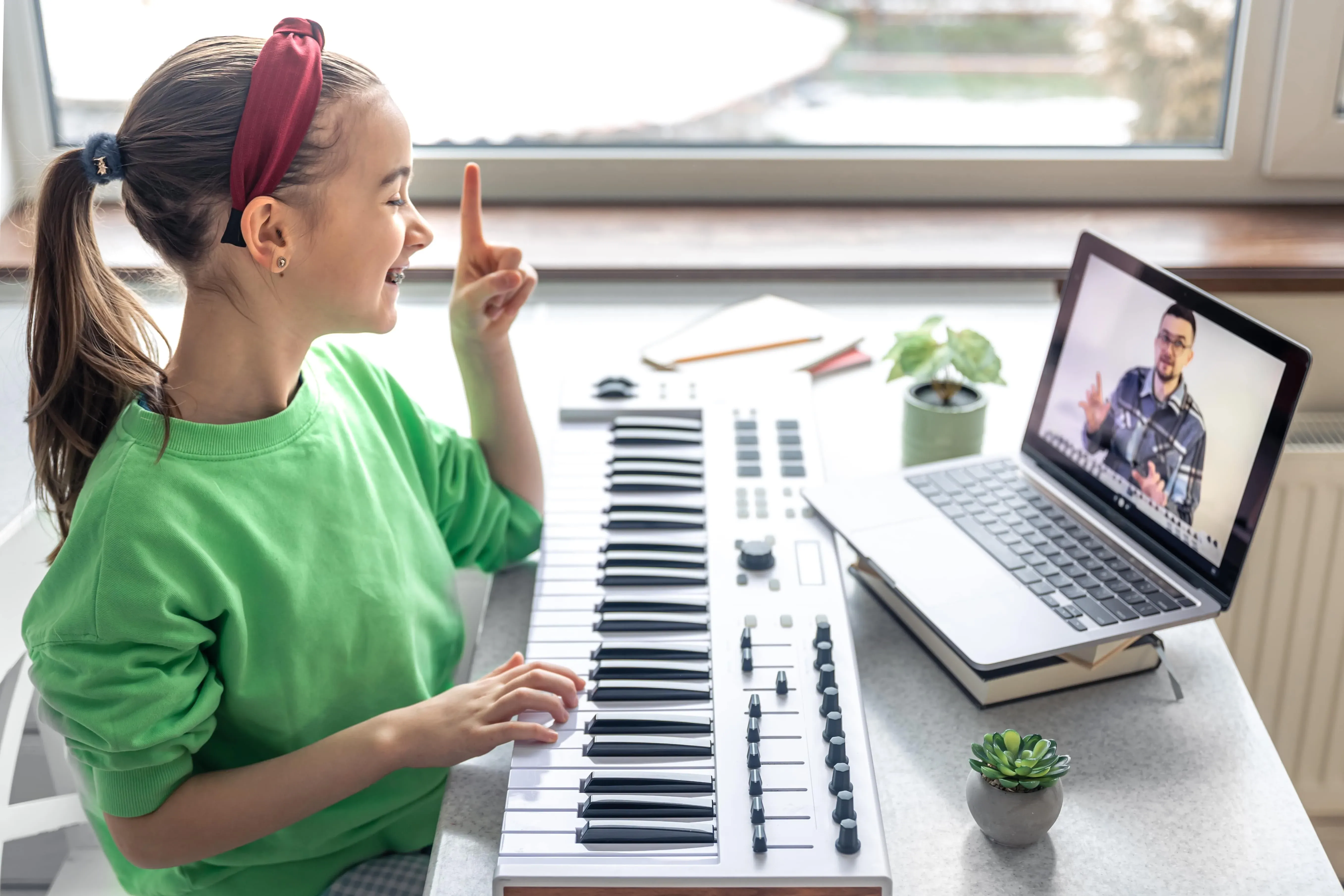
Online piano teacher and student having a conversation
Your 5-Minute Feedback Cheat Sheet
Keep this handy for quick reference during your lessons!
Start the Lesson Right
- "Great to see you! What part of your piece are you most excited about today?"
- "I was so happy to hear you worked on [last week's goal]."
During the Lesson
- Praise: "I loved how you played that part with so much feeling!"
- Pinpoint: "Now, let's focus on making this next section just as strong."
- Propose: "Try it like this..." (demonstrate)
- Practice: "Let's play it together, nice and slow."
End the Lesson Strong
- "Your biggest win today was..."
- "For next week, just keep working on [ONE simple thing]."
- "I'm already looking forward to hearing you next time!"
Crystal-Clear Feedback with the Right Teacher Toolbox
Try MOOZ, the video call app designed to make teaching, tracking, and motivating students easier than ever.
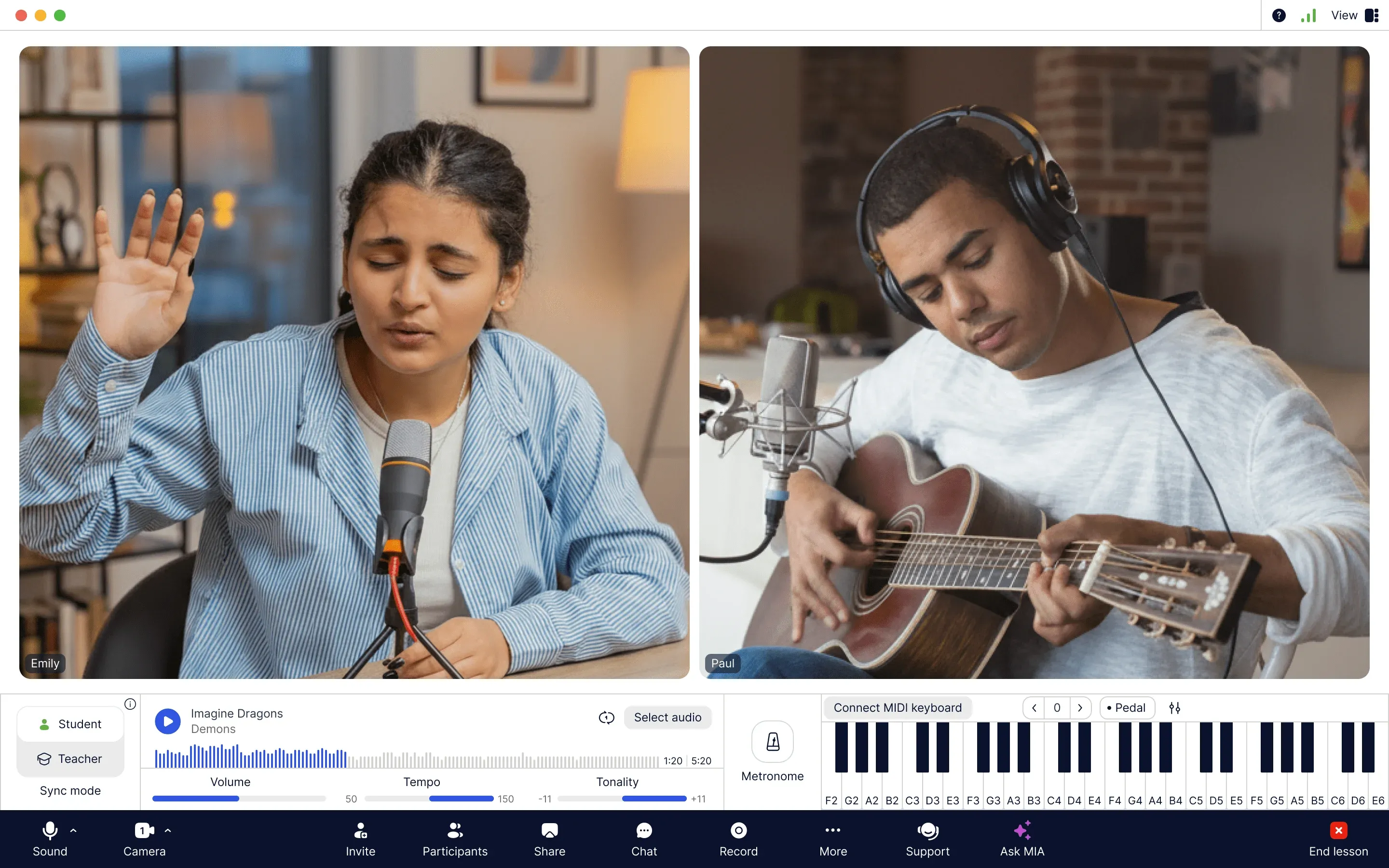
MOOZ app call window with built-in teacher tools
- Crystal-Clear Audio & 4K Video: Now, every word of your encouraging feedback will be heard perfectly. Giving precise guidance is easier than ever.
- Lesson Recording: Never miss a detail. Track student progress and provide timely feedback by easily revisiting any lesson.
- Multi-cam: Watch every movement from different angles connecting up to 5 cameras at a time.
- Built-in Metronome: Work on rhythm and timing seamlessly during your session.
- Digital Piano: connect MIDI keyboard and demonstrate melodies and chords instantly without switching tabs.
- Integrated Player: Practice and perform perfectly in sync with backing tracks.
- Intelligent Assistant: Need help phrasing your feedback? Our AI MIA can suggest the perfect way to say it!
Your words shape not just musicians - they shape confident, creative individuals. Now let’s make some beautiful music and inspire the next generation of musicians!
Start with just one new phrase in your next lesson and notice the difference it makes!

Related Articles

Synchronization in Online Music Lessons: A Complete Breakdown
Learn how tech fixes internet latency. Make synchronous music today!
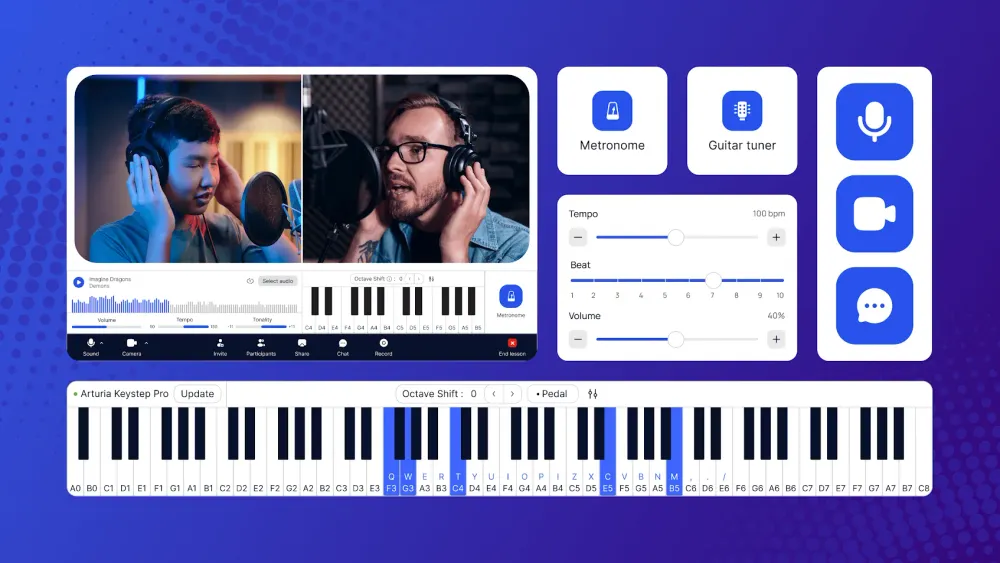
How to Start Your First Lesson in MOOZ: A Step-by-Step Guide
Read MOOZ step-by-step guide to make your first class smooth, professional, and perfectly in tune.
Guide to Teach Music Online Smarter: MOOZ & Moosiko Insights
Learn how to solve the 5 biggest online teaching challenges that are costing you time and students.