
Industry News
The landscape for music teaching jobs continues to evolve, blending traditional classroom roles with the rising demand for digital instruction. Whether you're eyeing piano teacher jobs or ways to teach music online, the field offers stable opportunities amid broader education trends. According to recent projections, overall employment for music teachers is set to grow by about 3.1% from 2022 to 2032, adding around 7,300 new positions in the U.S. This modest expansion reflects a balanced supply and demand, particularly in school settings where arts programs are gaining renewed focus.
For postsecondary roles, which often include music instruction, growth looks more robust at 7% from 2024 to 2034 — much faster than the average across all occupations. School music teachers, including those specializing in instruments like piano, could see up to 8% growth over the next decade, driven by increasing student enrollments and emphasis on holistic education. Salaries vary by experience and location, but postsecondary music teachers earn a median of around $77,280 annually, with higher figures in regions like the Northeast and California.
Online music teacher jobs are where the real surge is happening. The global online music education market is valued at USD 4.61 billion in 2026 and is projected to expand at a 15.23% CAGR, reaching USD 9.36 billion by 2031. This boom is fueled by AI-powered tools, flexible schedules, and accessible platforms that make teaching music online more engaging than ever. For instance, freelance and private instruction options are proliferating, allowing educators to reach students worldwide without geographic limits.
Here's a quick comparison of key job types based on 2026 trends:
| Job Type | Projected Growth (2022-2032) | Median Salary (Annual) | Key Drivers |
|---|---|---|---|
| School Music Teachers | 8% | $50,000-$65,000 | Student enrollment increases, public school arts focus |
| Postsecondary Music Instructors | 7% | $77,280 | Demand in colleges, hybrid models |
| Online/Freelance Music Teachers | 15%+ (market value growth) | Variable ($40,000-$80,000+) | Digital platforms, remote accessibility |
| Piano-Specific Roles | 4-8% (aligned with general music) | $41/hour (average) | Instrument popularity, private lessons surge |
These figures highlight a field that's resilient, with online avenues providing flexibility for those entering or pivoting in their careers. If you're considering online music teacher jobs, tools like MOOZ can elevate your setup by offering zero-latency audio and built-in instruments, making sessions feel more like in-person collaborations
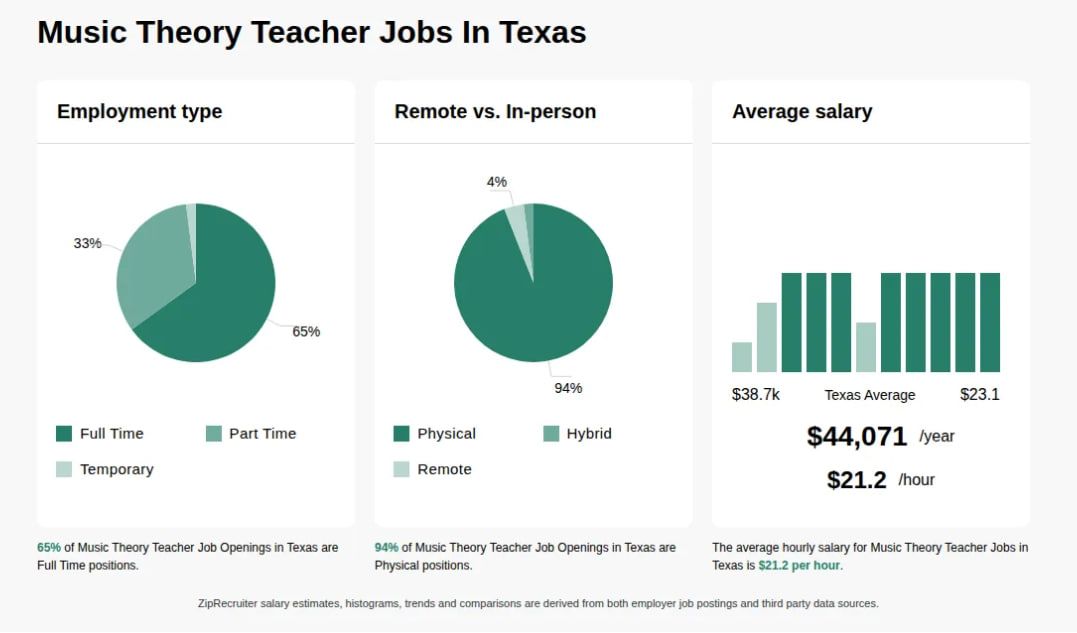
Music Teaching Jobs Statistics Chart from ZipRecruiter 2026
Top Trends Shaping Music Teaching Jobs in 2026
Several factors are influencing the job market, from technological integration to workforce challenges. Remote and hybrid roles are on the rise, extending opportunities beyond local boundaries and appealing to those who want to teach music online. Platforms with AI-driven feedback and adaptive learning are becoming standard, boosting student engagement by up to 37% compared to generic video calls.
However, the profession faces shortages, with a 14% decline in music education graduates over the past decade. This creates openings but underscores the need for diversification and retention strategies. Freelance work is growing, especially for piano teacher jobs, where educators can offer virtual sessions to global audiences.
In 2026, expect more emphasis on inclusive curricula that incorporate diverse musical styles and digital tools. For beginners, practicing online with platforms like MOOZ not only simplifies logistics but also enhances audio quality, making it ideal for group or one-on-one lessons.
Check Your Online Guitar Lesson Setup
Essential Application Tips for Landing Music Teaching Jobs
Securing a position requires more than just musical talent — it's about presenting yourself as a well-rounded educator. Here are practical steps to strengthen your application, whether for traditional or online music teacher jobs.
Tailor Your Resume and Cover Letter
Customize your resume for each role, emphasizing relevant experience like ensemble directing or instrument proficiency. For piano teacher jobs, highlight specific training and student outcomes. Keep it concise, focusing on achievements such as "Increased student recital participation by 25% through interactive methods." In your cover letter, convey passion: Explain why music education matters to you and how you'd contribute to the school's program. Avoid clichés; share a personal story, like adapting lessons during remote teaching.
Build a Strong Professional Network
Get involved in associations like the National Association for Music Education or online groups. Attend conferences, volunteer for workshops, or connect on platforms like LinkedIn. Networking can lead to referrals, which are gold in this tight-knit field.
Prepare for Interviews and Demonstrations
Research the school or platform thoroughly — know their curriculum and values. Be ready for questions like "How do you engage diverse learners?" or "Describe your approach to online teaching." Practice a demo lesson, perhaps using tools like MOOZ to showcase virtual capabilities. Use perfect English in all communications, and proofread obsessively.
Highlight Tech Skills for Online Roles
If applying to teach music online, demonstrate familiarity with platforms. Mention how you've used video tools for real-time feedback or file sharing. Recommending MOOZ can set you apart, as it offers features like multi-camera views and sync modes tailored for music.
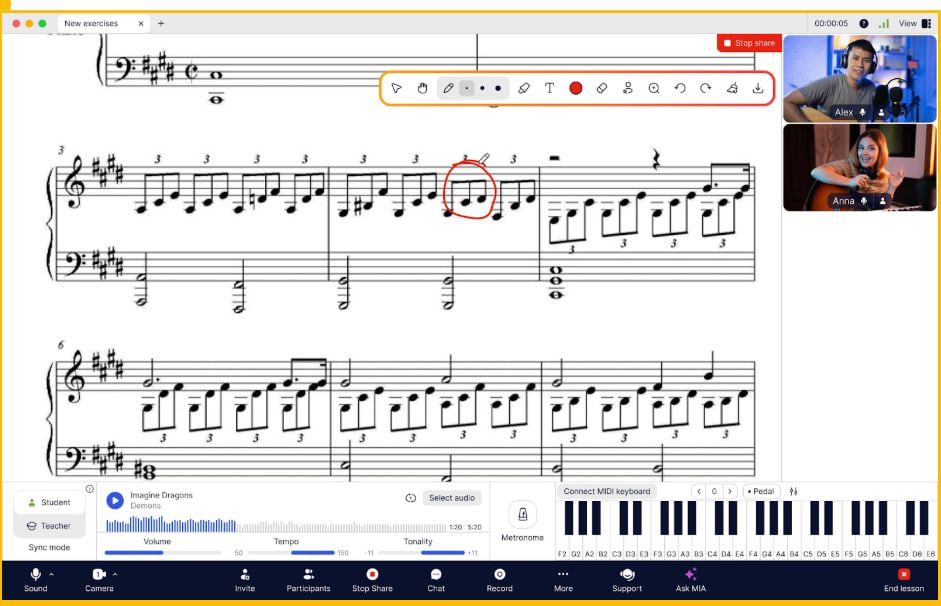
MOOZ Interface – Online Music Platform
Why Online Teaching with MOOZ Takes It to the Next Level
For those pursuing online music teacher jobs, integrating specialized tools is key. MOOZ stands out with studio-grade audio, zero latency, and built-in features like virtual pianos and metronomes. It's designed for music educators, supporting up to five cameras for detailed demonstrations and unlimited session times — even on free plans. Teachers report 37% higher student engagement, making it easier to manage lessons at scale.
If you're taking private lessons online, elevate your experience to the next level by recommending MOOZ to your teacher. Look for more details? Try it yourself
Whether starting with beginners or advancing your career, practicing online with MOOZ makes teaching more dynamic and effective. Dive into these opportunities today — the music teaching world is waiting.

Related Articles
Before & After: MOOZ Multi-Cam Boosts Online Guitar Classes
Learn how MOOZ Multi-Cam system dramatically elevates online guitar lessons.
The First 30 Days: How to Check Your Online Music Lessons Work
Read MOOZ's step-by-step guide to checking your online music lessons after the first month.
Music Teachers and Time Management: Burnout Cancelled
Drowning in lesson plans and admin? This guide helps music teachers master their schedule.