
Lesson Lab
Almost every adult who books a first singing lesson says some version of the same sentence in the first five minutes: I probably can't sing. Some add that a music teacher told them so, usually around the age of nine, usually in front of other children.
So let's deal with that before anything else, because it is the single thing that keeps most people out of a room where they would do perfectly well.
You are almost certainly not tone deaf
Tone deafness is a real condition. It's called congenital amusia, and it means the brain genuinely cannot process pitch differences that everyone else hears easily.
It is also rare. The largest study of it, by Isabelle Peretz and Dominique Vuvan, tested roughly 20,000 people with three objective tests rather than asking them to self-diagnose, and found congenital amusia in about 1.5% of the population. The 4% figure you'll see repeated online comes from a single test from 1980 on a much smaller sample.
Meanwhile, some surveys find as many as one in six adults describing themselves as tone deaf. The gap between those two numbers is enormous, and it is mostly made of untrained people.
Here's the part that explains it. Hearing a pitch and making your own voice land on that pitch are two separate skills. Most people who sing out of tune can hear perfectly well that something is wrong; what they can't yet do is control the muscles that adjust it, or judge the pitch of their own voice while it's happening. That's a production problem, and production problems respond to training the way a golf swing does.
A rough self-test before you spend money: play a single note on a piano app, hum it, and record both on your phone. Then listen back. If you can hear whether you were above or below the note, your ears work. The rest is mechanics.
What actually happens in a first voice lesson
The fear is that you'll be asked to perform and then judged. What happens is much duller.
A good first lesson is mostly the teacher gathering information. Expect roughly this:
- A conversation. What you listen to, what you want to sing, whether you've had any lessons, whether anything hurts when you sing.
- Finding your range. Simple exercises walked up and down the keyboard to see where your voice is comfortable, where it thins out, and where it changes gear.
- Breathing and posture. How you stand, where you breathe from, how much tension you're carrying in your jaw, tongue and shoulders. Most beginner problems start here.
- A few warm-up exercises. Sirens, lip trills, five-note scales on different vowels. They sound silly and they are diagnostic.
- A song, or part of one. Often something you brought. Sometimes just eight bars.
👩🎤🎵 Nobody hears their own voice accurately — it reaches you through your own skull. That's what a teacher is for. Get MOOZ and take your first singing lesson →.
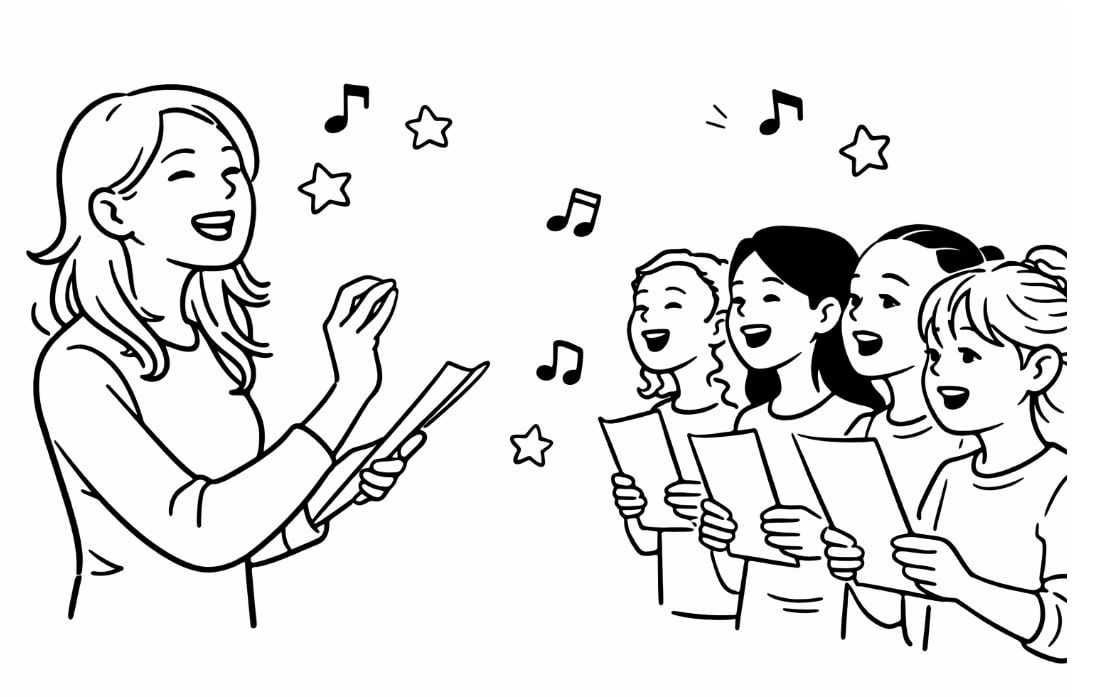
A vocal coach leading warm-ups: most of a first lesson is exercises, not performance
You will sing in front of one person. That person's job is to hear problems, not to be impressed. It is closer to a physiotherapy appointment than an audition, and most adults are surprised by how quickly the embarrassment wears off.
What beginner singing lessons are actually about
Almost none of it is what non-singers expect. Four things carry the first year:
Breath. Not "breathing more", but breathing low and releasing it slowly and evenly. Nearly every wobble, crack and running-out-of-air problem traces back to breath management rather than the throat.
Releasing tension. The voice is muscle, and beginners recruit far too many of them. A jaw clamped shut, a tongue pulled back, shoulders climbing toward the ears: each one changes the sound before a single note comes out.
Pitch and ear. Matching pitch, hearing intervals, holding a line when someone else sings a different one. This is trainable and it is the part that improves fastest with daily contact.
Registers. Chest voice, head voice, and the gear change between them, which teachers call the passaggio. Learning to move through it without a crack or a sudden drop in volume is most of what "range" actually means.
Notice what isn't on that list: style, vibrato, riffs, belting. Those come later and they come out of the four things above.
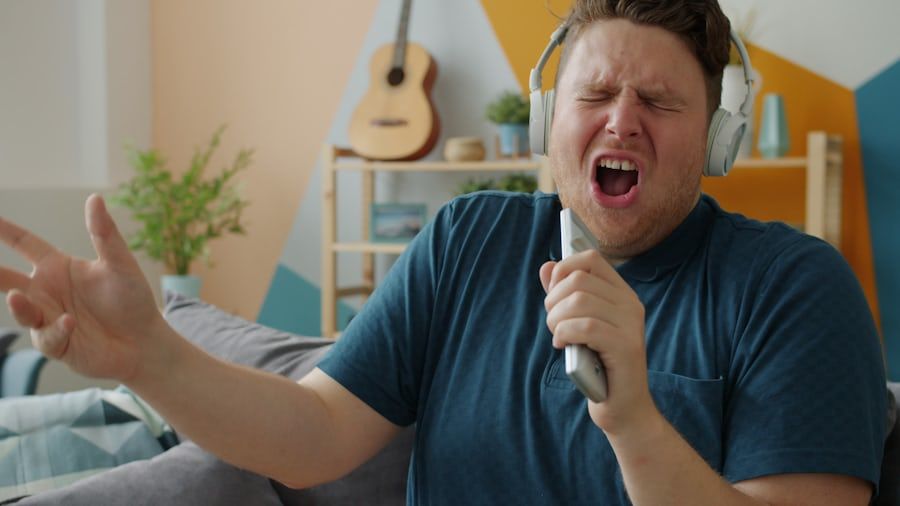
Adults learn technique fast; the harder part is being willing to make a bad noise on purpose
Is it too late to start as an adult?
No, and adults have some real advantages.
Your voice has finished changing, so what you build now stays built. You can follow an instruction like "keep the sensation forward while the soft palate lifts" without needing it translated into a game. You know what you want to sound like, which makes practice purposeful. Classical singers often don't begin serious training until their late teens or twenties precisely because the instrument needs to be mature.
The disadvantages are real too, and they are not physical. Adults are more self-conscious, more prone to stopping at the first ugly noise, and much busier. The self-consciousness is the one that costs the most progress, because improvement requires making bad sounds on purpose in front of someone.
How often, and how long until you hear a difference
The standard shape is one lesson a week and ten to twenty minutes of practice on most days between them. Consistency beats duration comfortably: five days of fifteen minutes does far more than one ninety-minute session at the weekend, because you're training muscle coordination and a set of habits.
Rough expectations, assuming you practise:
- Weeks 1–3. Breathing and posture start to feel less strange. You may sound worse for a bit, because you're dismantling habits.
- Weeks 6–8. The first changes other people notice: steadier tone, fewer cracks, more air behind the sound.
- Months 6–12. Usable range grows, the register change smooths out, and you stop being afraid of the top of a song.
Anyone promising a transformed voice in two weeks is selling something.
Online or in person: the honest comparison
Singing lessons work well online, with one caveat worth knowing before you book.
The caveat. You and your teacher cannot sing together in real time. Any internet connection adds a delay of tens of milliseconds each way, which is enough to make unison singing impossible on any video platform. Teachers work around this constantly: they demonstrate, then you sing; they play the accompaniment, then listen. If a teacher tells you that's not an issue, they either haven't tried it or aren't listening carefully.
What online genuinely fixes. Access to a teacher who suits your voice and your style rather than whoever is within driving distance, no travel, and lessons at hours a studio wouldn't offer. Being at home also means singing in the room where you'll practise, which matters more than people expect.
Where the platform matters. Ordinary video calls are built to make speech intelligible on bad connections. They compress audio, cut quiet sounds, and shave off the high frequencies. Unfortunately breathiness, sibilance and the ring in a well-placed note live exactly in the parts that get thrown away, and those are the things a voice teacher is listening for. A platform built for music keeps them.
🎧🎼 Not sure whether your voice is tired or just untrained? A teacher can tell in one lesson. Get MOOZ and take your first singing lesson →.
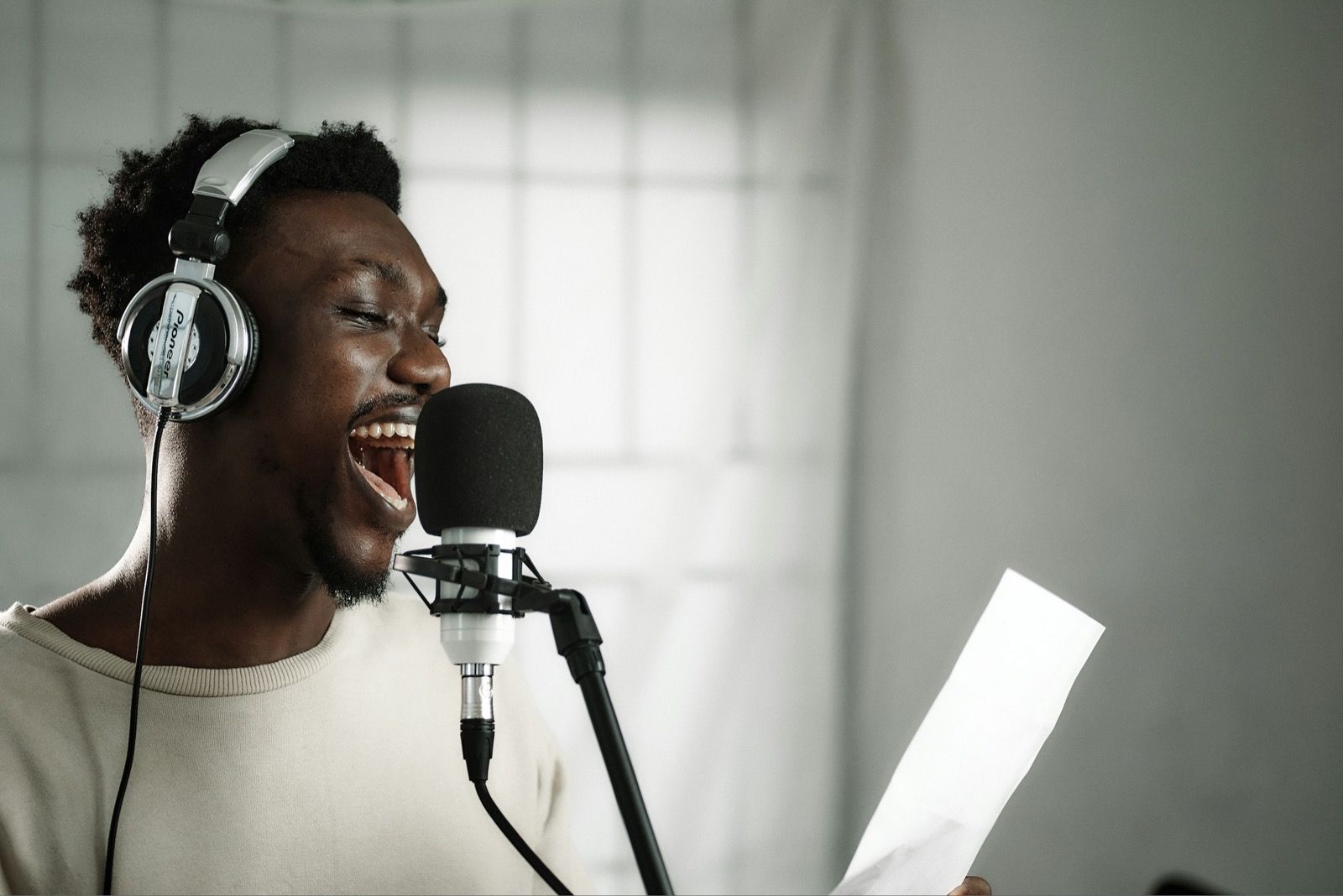
Headphones first: they stop your teacher's sound leaking back into your mic
Practical setup: use headphones, always, so the teacher's sound isn't fed back through your mic. Wired beats Bluetooth, which adds its own delay. Your laptop mic is adequate to start. Stand up, and set the camera far enough back that your teacher can see you from the knees up, because they need to watch your ribs and shoulders, not just your face.
If you're weighing local teachers against online ones, we covered the search itself in how to find vocal lessons near you.
How to choose a teacher
Voice teaching is unregulated in most countries, so the filter matters.
Questions worth asking before you book:
- Do they teach beginners regularly, or mostly advanced singers? These are different jobs.
- What style do they teach? Classical technique and contemporary technique overlap but a teacher who only does one may reshape your voice toward it by default.
- Will they demonstrate? Hearing the thing you're being asked to do is worth a paragraph of explanation.
- Can you record the lesson? You will not remember the exercises otherwise.
Warning signs in the first month: pushing you to sing loudly at the top of your range, no warm-up before difficult material, an identical exercise routine for every student regardless of voice, or any instruction that hurts. Singing should feel like effort in the body and nothing much in the throat.
Take a trial lesson with two teachers before committing to a package. The technical difference between two qualified teachers is usually smaller than the difference in whether you feel comfortable making terrible noises in front of them, and the second thing determines your progress.
Looking after your voice
- Water, consistently. Hydration reaches the vocal folds hours later, not minutes later, so drinking during a lesson is comfort rather than repair.
- Sleep. Voices show fatigue before faces do.
- Don't whisper when you're hoarse. It's harder on the folds than speaking quietly.
- Warm up before, and don't practise through pain. Tickling, burning or a voice that drops out means stop for the day.
- Hoarseness lasting more than two weeks is worth a doctor, not a teacher.
Do you need to read music to sing?
Not to start, and plenty of working singers read very little. Lyrics, a good ear and a recording will carry you a long way.
It becomes worth learning when you join a choir, work with a pianist from a score, or want to learn material nobody has recorded a tutorial for. If you decide to, our step-by-step guide to reading sheet music is built for exactly this: singers benefit most from the rhythm and interval sections, since your instrument has no keys to look at.
FAQ: singing lessons for beginners
Can adults really learn to sing, or is it a talent you're born with?
Learn, in almost every case. Pitch accuracy, breath control and range are trained skills with well-established teaching methods behind them. Genuine congenital amusia affects about 1.5% of people. The odds are strongly against you being in that group.
Am I too old for singing lessons?
No. Adult voices are stable and adults learn technique faster than children do. Teachers routinely take beginners in their forties, sixties and beyond. The limits that show up with age are about stamina and flexibility, not whether you can improve.
What should I expect from my first lesson?
Talking, breathing exercises, some scales to map your range, and probably part of one song. No performance, no audition, and no requirement to have sung before.
How many lessons before I sound better?
Most people hear a difference in themselves within six to eight weeks of weekly lessons with regular practice. Other people usually notice around the same point, often before you're willing to believe them.
Are online voice lessons as good as in-person ones?
For technique, ear training and repertoire work, yes, provided the audio is good and you use headphones. The one real limitation is that you can't sing simultaneously with your teacher because of network delay, so lessons alternate rather than overlap.
Do I need any equipment to start?
Headphones and a device with a camera. That's it. A microphone, an interface and a keyboard are useful later and unnecessary in month one.
What if I only want to sing for fun?
Say so in the first lesson. A good teacher will build around it, and the technical foundation is the same whether you're aiming for a stage or your own living room.
Starting with a teacher who fits your voice
The two things that decide whether adult beginners stick with singing are finding a teacher you can be bad in front of, and hearing evidence that you're changing. Recorded lessons handle the second one: a recording from week one, played back in week ten, is far more convincing than anyone's encouragement.
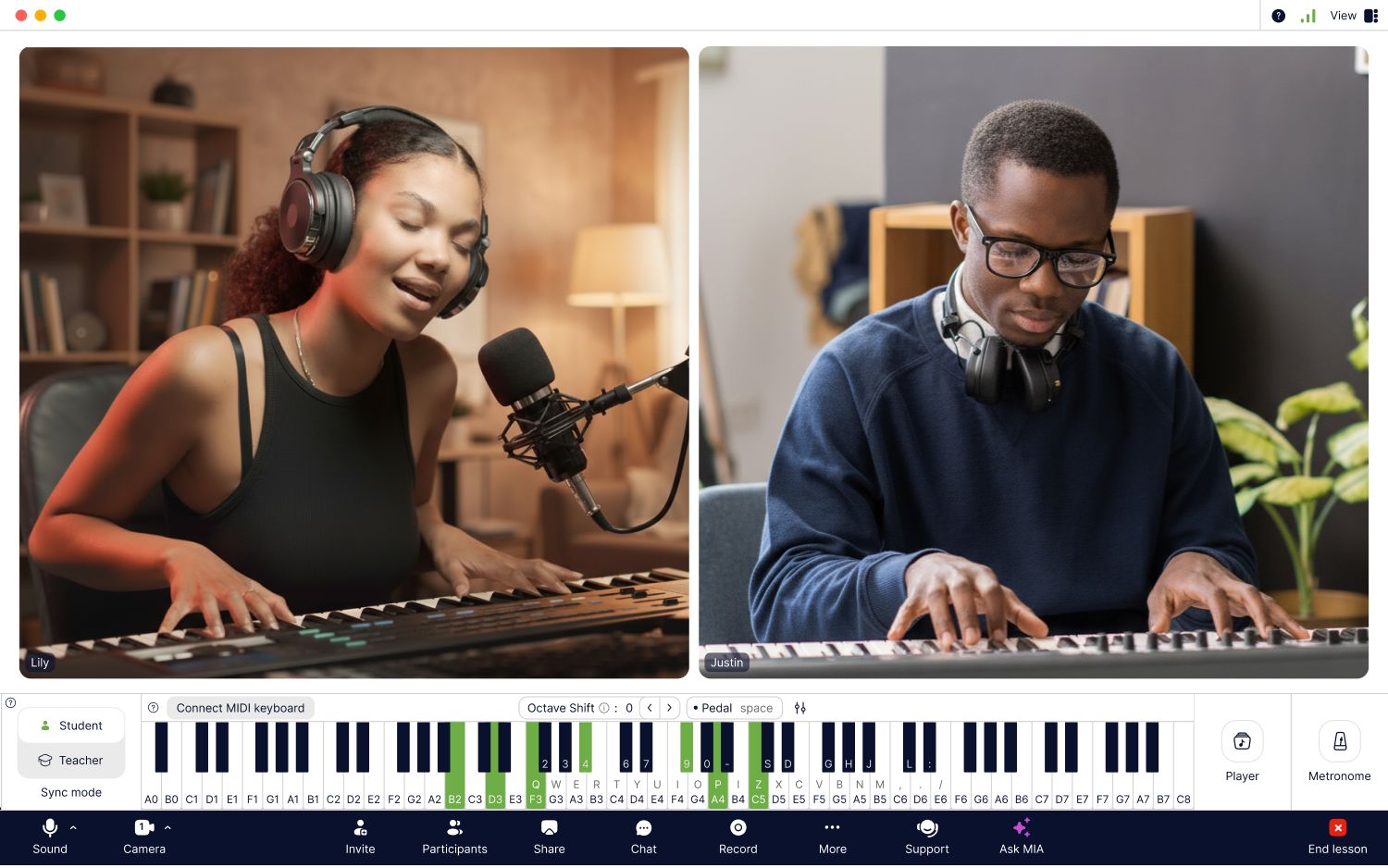
A live vocal lesson on MOOZ, with the teacher hearing your actual tone rather than a compressed version
On MOOZ you can get MOOZ and take your first singing lesson. Lessons run in a platform built for music, so your teacher hears your actual tone rather than a compressed version of it, can transpose a backing track into your range mid-lesson, and can record the whole thing for you to practise with during the week.
Sources
- Isabelle Peretz and Dominique T. Vuvan, "Prevalence of Congenital Amusia," European Journal of Human Genetics 25, no. 5 (2017): 625–630. Based on objective testing of roughly 20,000 participants.
Related Articles

Synchronization in Online Music Lessons: A Complete Breakdown
Learn how tech fixes internet latency. Make synchronous music today!
Why Online Music Schools Lose 35% of Students
Discover how music schools can reach 15–20% higher student retention.
Online vs In-Person Guitar Lessons: Pros and Cons
Compare online and in-person guitar lessons to find the best way to learn guitar. Learn costs, pros and cons, and how to choose the right format for fast progress.