
Lesson Lab
If you're trying to figure out the best way to learn guitar, you'll quickly hit the same question everyone asks: Should you go online or find a teacher in person?
Both work. Both can get you results. But they're not equal for every situation.
This guide breaks it down clearly so you can choose what actually fits your goals, budget, and lifestyle.
Why This Choice Matters More Than You Think
The format you choose directly affects how fast you improve, how consistent your practice is, and how much you spend long term.
A great teacher in the wrong format can slow you down. A decent setup in the right format can push you forward fast.
So this is not just preference. It's strategy.
Online Guitar Lessons: Pros and Cons
👩🏫🎸 Whichever format you pick, a good teacher speeds it up. Get MOOZ and take your first guitar lesson →.
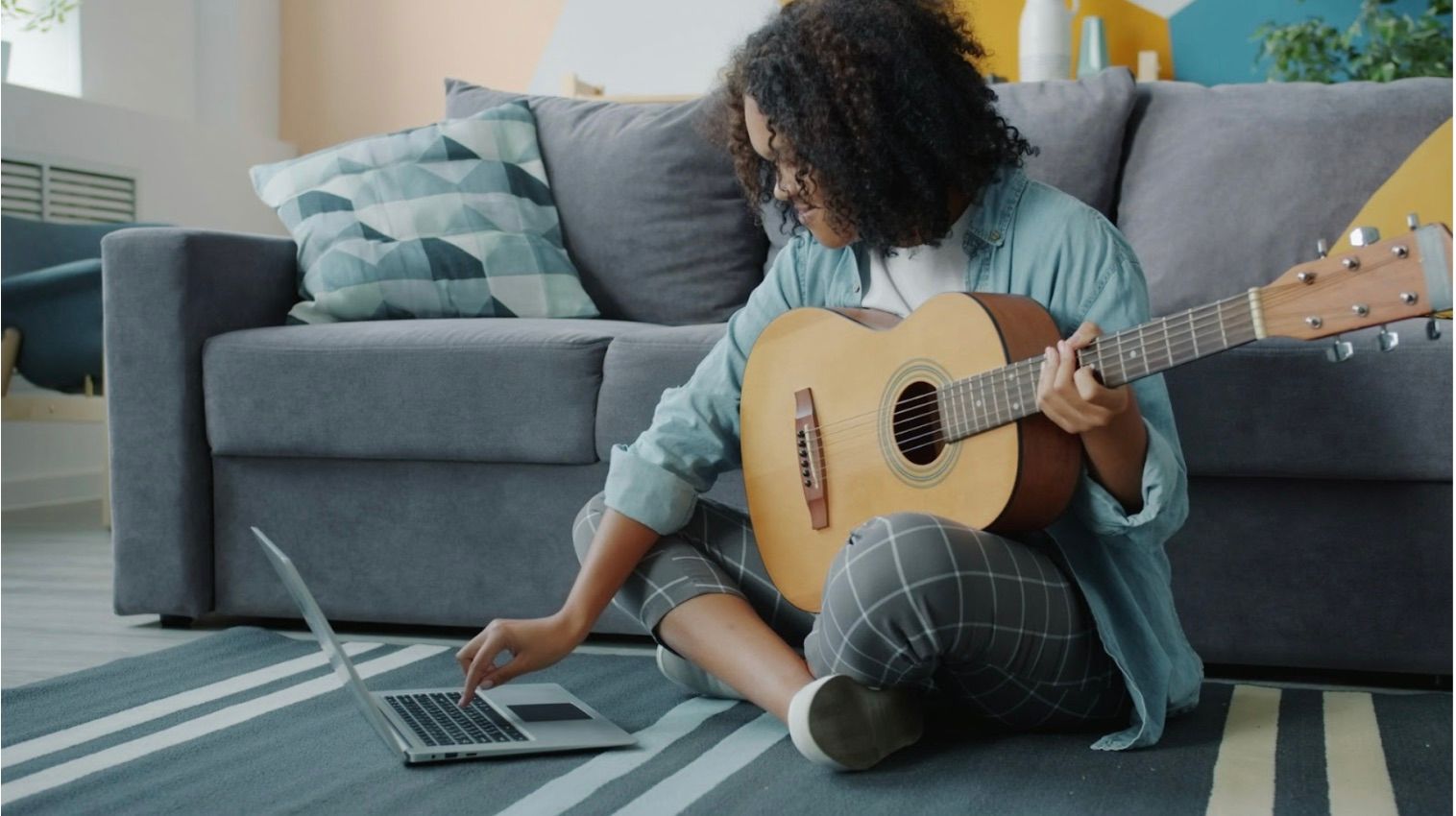
Learn guitar from anywhere with just your laptop and instrument
Online learning has exploded in the last few years. Not just for guitar, but also for niches like online bass guitar lessons, where access to good teachers used to be limited.
Pros of Online Guitar Lessons
1. Maximum flexibility — You can learn anytime. Morning, night, weekends. No commuting, no schedule friction. This alone is why many people stick with it longer.
2. Access to better teachers — You're not limited to your city. You can learn from specialists worldwide. This is huge if you want a specific style (jazz, metal, fingerstyle) or are beyond beginner level.
3. Lower cost — Average guitar lessons price online: $20–$60 per hour (private), $10–$30 (group or platforms). Compared to offline, this is often 20–40% cheaper.
4. Better tools for practice — Modern platforms offer backing tracks, slow-down features, and recording and playback. These accelerate learning if used correctly.
5. Easier to stay consistent — No travel = fewer excuses. Consistency beats intensity in guitar learning.
Cons of Online Guitar Lessons
1. Less physical correction — A teacher can't adjust your posture or hand position directly. This matters for beginners.
2. Audio quality issues (on normal apps) — Standard video calls compress sound. You lose detail in tone, timing, and dynamics.
3. Requires self-discipline — If you're not consistent, online learning can drift fast. No physical presence = easier to skip.
In-Person Guitar Lessons: Pros and Cons

A teacher can instantly spot and correct your hand positioning during a lesson
Traditional, structured, and still very effective.
Pros of In-Person Lessons
1. Immediate feedback — A teacher can fix your hand position instantly, correct posture, and stop bad habits early. This is extremely valuable in the first 3–6 months.
2. Strong accountability — Showing up physically creates commitment. You're less likely to cancel or skip.
3. Better sound perception — You hear real tone, not compressed audio. This helps develop musical ear faster.
4. Structured learning environment — No distractions. Just you, the teacher, and the instrument.
Cons of In-Person Lessons
1. Higher cost — Typical guitar lessons price offline: $40–$120 per hour, premium teachers: $150+.
2. Limited teacher choice — You're restricted to your location. Finding a good teacher locally is not guaranteed.
3. Time inefficiency — Travel time adds up fast. 2 lessons per week can mean 3–4 extra hours lost.
4. Rigid scheduling — Missed lessons = often lost money.
Online vs In-Person: Direct Comparison
| Factor | Online Lessons | In-Person Lessons |
|---|---|---|
| Cost | Lower | Higher |
| Flexibility | High | Low |
| Teacher access | Global | Local only |
| Feedback quality | Medium | High |
| Convenience | Very high | Low |
| Discipline required | High | Medium |
So, What Is the Best Way to Learn Guitar?
👩🏫🎸 Want real feedback on your playing? Get MOOZ and take your first guitar lesson →.

Practice daily in your own space without rigid schedules or travel
There is no universal answer. But there is a clear pattern.
Online is better if you: value flexibility, want access to top teachers, are self-motivated, or want to save money.
In-person is better if you: are a complete beginner, struggle with discipline, want hands-on correction, or prefer structured learning.
The Hybrid Approach (Best of Both)
This is what most advanced learners move to: weekly or bi-weekly live lessons (online or offline) combined with daily self-practice with tools and exercises.
This combines accountability, flexibility, and faster progress. For example: learn technique with a teacher, then practice with backing tracks and recordings.
This is currently the most efficient model in 2026.
A Critical Detail Most People Miss
If you choose online lessons, your experience depends heavily on audio quality.
Regular apps like Zoom or Meet compress sound, distort timing, and kill subtle details. That makes music learning harder than it should be.
Specialized platforms designed for musicians fix this by providing clean audio, real-time interaction, and tools like metronomes and backing tracks. This is not a small upgrade. It changes how effectively you learn.
Final Takeaway
If you're serious about progress: beginners can start with in-person or guided online, intermediate players benefit more from online flexibility, and advanced players almost always go hybrid.
The best way to learn guitar is not about format alone. It's about consistency, feedback, and using the right tools.
Ready to Start Learning Guitar?
If you want fast progress without wasting time: choose a teacher that matches your style, set a fixed weekly schedule, and use a platform built for music, not generic calls.
Start your first online lesson today and feel the difference from day one.
Whichever way you learn, a teacher who can hear you play speeds up progress. You can get MOOZ and take your first guitar lesson.
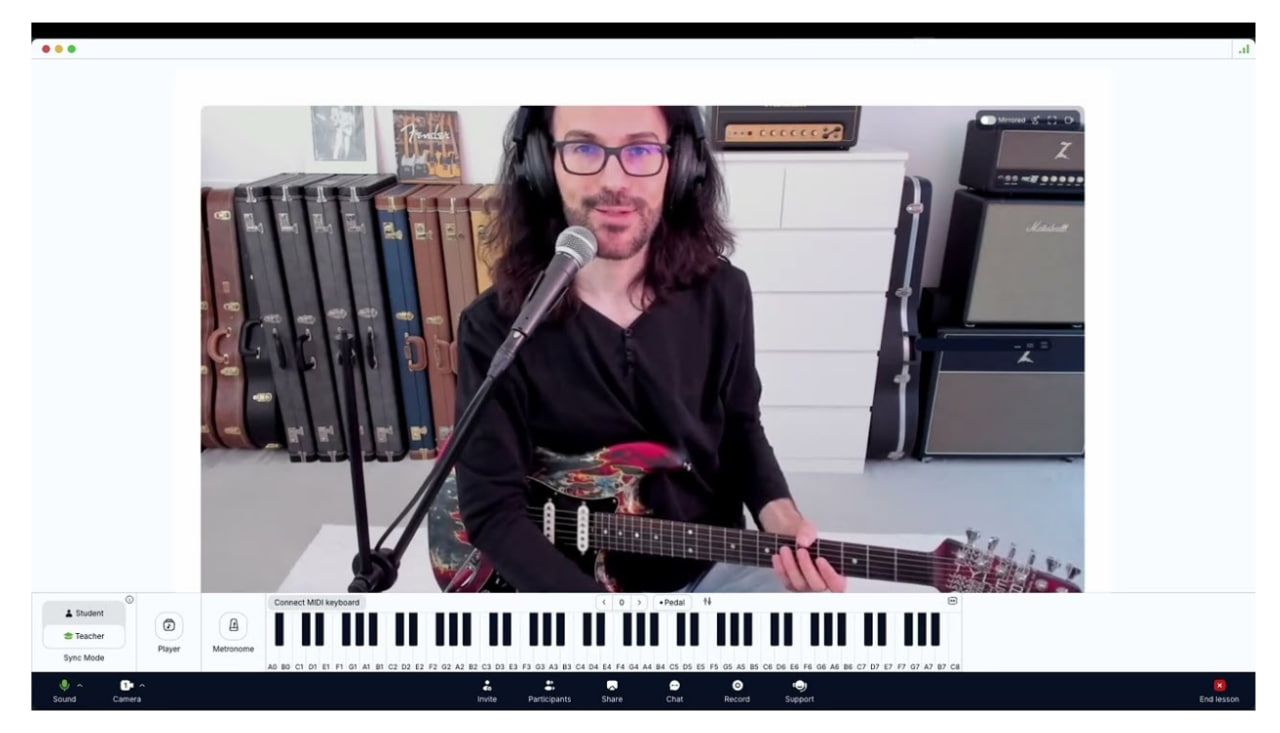
A guitar lesson running in MOOZ. Free for students to join.

Related Articles

Synchronization in Online Music Lessons: A Complete Breakdown
Learn how tech fixes internet latency. Make synchronous music today!
Why Online Music Schools Lose 35% of Students
Discover how music schools can reach 15–20% higher student retention.
10 Vocal Warm-Up Exercises Every Singer Should Know
Ten vocal warm-up exercises explained: what each one does, how to do it, and the mistake that makes it useless. Plus a five-minute routine and choir warm-ups.