
Lesson Lab
Ang epektibong music lesson planning sa 2026 ay praktikal, modular, at dinisenyo para sa online teaching mula sa simula. Ang pinakamatibay na lesson plan ngayon ay pinagsasama ang malinaw na istraktura, flexible na timing, nakakaengganyong music lesson activities, at matalinong paggamit ng online teaching platform.
Ang gabay na ito ay para sa lahat ng music teacher na nagtuturo online: mga preschool at elementary educators, pribadong instrument teacher, vocal coach, at mixed-age studios. Sinasalamin nito kung paano talaga nagpaplano ng lessons ang mga matagumpay na guro — batay sa best practices mula sa mga totoong online classrooms.
Makikita mo rito:
- Isang modernong framework para sa online music lesson planning
- Handa nang gamitin na tables at outlines ayon sa edad at instrumento
- Mga halimbawa ng music class lesson plans na epektibo online
- Instrument-specific planning models
- Mga praktikal na templates na inangkop para sa pagtuturo sa MOOZ
Bakit Kailangan ng Iyong Lesson Plan ng Upgrade para sa 2026
Ang mga estudyante at magulang ngayon ay hindi lang naghahanap ng music teacher — naghahanap sila ng resulta at magandang karanasan. Ang lesson planning ngayon ay dapat isaalang-alang ang mas maikling attention span sa online learning at mas mataas na expectations para sa structure at clarity. Ang tanawin ng music teaching ay permanenteng nagbago. Ang isang maayos na online music class plan ay hindi na opsyon — ito ay mahalaga para sa:
- Combating screen fatigue through varied, interactive segments
- Projecting professionalism na umaakit at nagpapanatili ng mga estudyante
- Reducing your prep time with reusable templates
- Enhancing student progress through clear, measurable goals
Ang mga magulang na naghahanap ng "best piano lessons online" at mga adult na naghahanap ng "top rated online guitar lessons" ay pumipili ng mga educator na nagpapakita ng organisasyon at kadalubhasaan.

Paano Nagpaplano ng Lessons ang mga Music Teacher sa 2026
Para sa isang music teacher, ang lesson planning ay hindi na isang one-size-fits-all na dokumento. Ang pinaka-epektibong guro ay gumagamit ng mga sumusunod na haligi ng isang future-ready music class plan:
1. Ang Hybrid Objective Blend
Ang bawat plano ay dapat balansehin ang teknikal na layunin (pag-master ng C major scale, pag-unawa sa 4/4 time) at isang ekspresibong layunin (pagtugtog ng opening ng "Happy Birthday," pag-improvise ng maikling melody). Ito ay mahalaga para sa lahat ng music class lesson plans, mula kindergarten hanggang adult.
2. Ang "Micro-Activity" Flow na may Malinaw na Time-Based Outlines
Para sa online teaching, mahalaga ang attention span. Gumamit ng modular lesson blocks sa halip na rigid scripts at i-structure ang iyong oras sa 5-10-15 minutong blocks.
3. Digital Tool Integration
Ang modernong music teaching ay nangangailangan ng tech toolkit. Ang lesson plan mismo ay dapat tandaan kung paano ihahatid ang isang konsepto: Ipakilala ang rhythm sa pamamagitan ng screen-shared notation, magbahagi ng play-along track mula sa audio library, ipakita ang technique sa pamamagitan ng multiple cameras. Ang pre-planning na ito ay ginagawang aktibo at nakakaengganyong classroom ang online teaching platform, hindi lang passive video pipe.
4. Ang System, Hindi Lang Script
Ang kahusayan ay nagmumula sa paggawa ng reusable systems. Nangangahulugan ito ng pagkakaroon ng adaptable frameworks — hindi rigid scripts — para sa iba't ibang student archetypes (ang batang baguhan, ang teen rock enthusiast, ang adult hobbyist). Ang bawat framework ay may built-in engagement moments (mabilis na call-and-response, surprise listening game) na maaaring isaksak kung kinakailangan.
Ang pamamaraang ito ay sumusuporta sa mas magandang resulta sa online music classes at binabawasan ang lingguhang prep time.
Ang Online-First Music Lesson Plan Framework
Ang isang matibay na music lesson plan para sa online teaching ay binuo mula sa paulit-ulit na blocks:
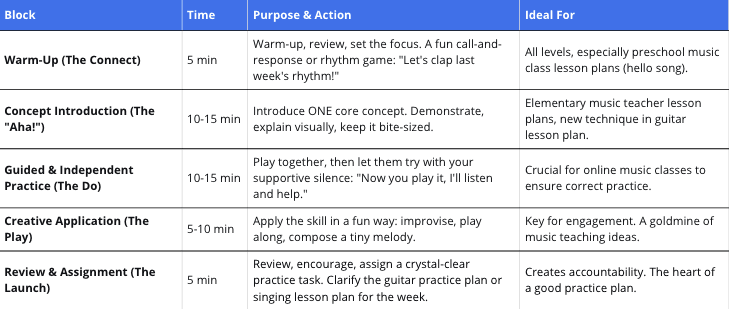
Ang istrakturang ito ay gumagana sa karamihan ng music class lesson plans, mula preschool hanggang adult. Sa ibaba ay nakalap namin ang mga handa nang gamitin na lesson plan examples para sa iyong niche.
Age-Specific Lesson Planning Strategies
Para sa Early Childhood (Edad 3-6): Ang Playful Explorer Plan
Ang isang matibay na preschool music lesson plan ay nagtatayo ng early music curriculum para sa preschool sa tatlong haligi: exploration, repetition, at emotional connection. Ang layunin ay engagement, hindi perfection. Panatilihing maikli, aktibo, at predictable ang mga session. Ang kindergarten music lesson plans ay nag-evolve nito sa pamamagitan ng pagpapakilala ng simpleng notation icons, listening contrasts (mabilis/mabagal), at basic group ensemble skills.
Halimbawa ng 25-Minutong Online Music Lesson Plan para sa Preschool:
Welcome & Sing (5 min): Isang predictable na hello song na may mga galaw para sa bawat bata. Tumutok sa pagtatatag ng eye contact sa pamamagitan ng camera at paggawa ng pamilyar na ritwal.
Move & Groove (7 min): Freeze dance sa musikang may magkakaibang tempo o guided movement sa isang action song ("If You're Happy and You Know It").
Sound Discovery (6 min): Exploring a single instrument (e.g., shaker). Leader-follower pattern: teacher plays "quiet-loud-quiet," student echoes.
Quiet Listen & Imagine (4 min): Pakikinig sa 60-segundong excerpt (hal., "Flight of the Bumblebee"). Tanong: "Mabilis ba o mabagal ang musikang iyon? Ano ang naalala mo rito?"
Goodbye Ritual (3 min): Isang kalmado at consistent na closing song na may "musical goodbye" — yumuyuko o nagpapadala ng halik sa camera ang estudyante.

Para sa Elementary Class (Edad 7-11): Ang Engaged Musician Plan
Ang mga epektibong elementary music lesson plans ay structured ngunit malikhain. Pinapaliit nila ang lecture time at pinalalaki ang aktibong paggawa. Ang pamamaraang ito ay nagpapanatili sa mga estudyante na engaged at ginagawang tangible ang pagkatuto.
Sample 40-Minute Online Elementary Music Class Plan:
Rhythm Rally (5 min): Body percussion warm-up. Pumalakpak ang guro ng pattern gamit ang quarter at eighth notes, at inuulit ng mga estudyante. Unti-unting dagdagan ang complexity.
Concept Dive (12 min): Pagpapakilala ng note values (quarter, paired eighths). Paggamit ng shared screen na may visual note cards. Pag-awit ng rhythms na may syllables ("ta," "ti-ti").
Group Play Lab (10 min): Application: gumagamit ang mga estudyante ng mga kutsara/lapis sa bahay para gawin ang natutunang rhythm bilang ensemble sa backing track na ibinahagi sa pamamagitan ng audio ng platform.
Composer's Corner (8 min): Creative challenge: "Gumawa ng sarili mong 4-beat rhythm pattern gamit lang ang 'ta' at 'ti-ti' at itanghal ito para sa amin."
Exit Ticket (5 min): Reflection & assignment: "Ano ang pinaka-interesante ngayon? Ang misyon mo ay ituro ang rhythm na ito sa isang tao sa bahay."

Instrument-Specific Lesson Planning Strategies
Para sa Piano (Mga Bata at Adult): Progressive Achievement Plan
Upang matugunan ang demand para sa top-rated online piano lessons, ang iyong piano lesson plans para sa mga adult at bata ay dapat goal-oriented. Ang modelong ito ay binabalanse ang teknikal na higpit at musicality, na naaayon sa mga expectations para sa pinakamahusay na piano classes online.
Sample 45-Minute Online Piano Lesson Plan:
Technical Check-In (5 min): C Major scale, isang octave na magkasama ang mga kamay. Tumutok sa pantay na fingering at makinis na pag-ikot ng kamay.
Repertoire Deep Dive (15 min): Paggawa sa measures 5-8 ng "Für Elise." Pagsusuri ng fingering, pagperpekto ng legato sa kanang kamay, at dynamic contrast (p sa kaliwa, mf sa kanan).
Skill Spotlight (10 min): Praktikal na teorya: pagbuo at pagtugtog ng triads mula sa C, F, G sa kaliwang kamay. Pag-uugnay nito sa accompaniment sa kasalukuyang piyesa.
Performance Prep (10 min): Pagtugtog ng buong unang seksyon (mm. 1-16) na may pokus sa paggawa ng pinag-isang musical line at expression, hindi lang ang mga nota.
Goal Setting (5 min): Tiyak na practice plan: "Makamit ang steady tempo na 60 BPM para sa mm. 1-16. Gumugol ng 5 minuto araw-araw sa pagtugtog ng scale na nakapikit para sa tactile confidence."

Para sa Guitar / Ukulele (Mga Bata at Adult): Ang Practical Player Plan
Ang isang structured guitar lesson plan ay ang pundasyon para sa masusukat na pag-unlad sa online music classes. Binabago nito ang random practice sa lohikal na skill-building path, tinitiyak na ang bawat session ay naghahatid ng tangible achievement. Ang parehong prinsipyong ito ay nagpapalakas sa isang epektibong ukulele lesson plan: idisenyo ang mga unang lessons para sa instant success. Gumamit ng simpleng strumming patterns at kilalang melodies para bumuo ng kumpiyansa mula sa unang araw, na ginagawang motivated players ang mga baguhan.
Sample 60-Minute Online Guitar Lesson Plan:
Warm-up & Review (5 min): Pagpapalambot ng daliri gamit ang 1st-fret chromatic exercise. Balikan ang chords Am at E mula sa nakaraang lesson.
New Skill Focus (20 min): Pag-aaral ng chord transition Am -> E -> Dm. Mabagal at maingat na pagsasanay ng bawat finger placement, gamit ang metronome sa 40 BPM.
Song in Context (20 min): Paglalapat ng mga chords sa verse ng "Stand By Me" (simpleng 4-downstrum pattern). Tumutok sa pagpapalit ng chords nang eksakto sa beat.
Creative Improv / Strumming Lab (10 min): Improvisation: gumawa ng simpleng 3-note riff sa key ng A minor. O, mag-eksperimento sa iba't ibang strumming patterns.
Practice Plan Co-Creation (5 min): Malinaw na assignment: "I-drill ang Am-Dm transition sa loob ng 5 minuto araw-araw. Buuin ang song strumming sa 70 BPM. I-record at ipadala ang isang verse bago ang susunod na lesson."

Para sa Boses / Pag-awit (Mga Bata at Matatanda): Ang Plano ng Nagpapahayag na Tagapagtanghal
Ang mga propesyonal na plano ng aralin sa boses ay tumutulay sa agwat sa pagitan ng teknikal na boses at tunay na pagtatanghal. Sa online na format, ito ay nangangailangan ng hybrid na istraktura: isang bahagi ay sistematikong pagsasanay ng kasanayan, isang bahagi ay pagtuturo ng pagpapahayag. Ang visual na daloy ng aralin — malinaw na mga screen, nakatakdang oras, annotated na mga marka — ay nagiging iyong kasamang guro, na nagdidirekta ng pokus at nagpapanatili ng pakikilahok kapag hindi kayo magkasama sa iisang silid.
Halimbawa ng 60-Minutong Online na Plano ng Aralin sa Boses:
Pisikal at Breath Warm-up (10 min): Mga ehersisyo ng pisikal na pagpapakawala (pag-alog, pagbuntong-hininga), sinusundan ng suportadong paghinga sa tuloy-tuloy na tunog na "sss" sa loob ng 8-10 bilang.
Pokus sa Teknikal na Boses (20 min): Paggawa sa maayos na paglipat ng rehistro (chest/head mix) sa isang pataas-pababang arpeggio gamit ang patinig na [i] ("ee").
Aplikasyon ng Repertoire (20 min): Paggawa sa taludtod ng isang napiling kanta (hal., "Someone Like You" ni Adele). Pokus sa katumpakan ng tono sa mas mataas na parirala at makabuluhang pagbibigay-diin sa teksto.
Sining at Interpretasyon (7 min): Pagsusuri at pagsasanay ng emosyonal na paghahatid: saan ang kasukdulan, saan kakanta nang mas malapit, paggawa gamit ang dynamics (crescendo, diminuendo).
Takdang-Aralin at Gawain ng Pagre-record sa Sarili (3 min): Takdang-aralin: "Magsanay ng ehersisyo sa paghinga araw-araw. Isaulo ang mga liriko para sa ikalawang taludtod. Magpadala ng voice memo ng unang taludtod, na nakatuon sa pare-parehong tono."

Mga Aktibidad sa Aralin ng Musika na may Mataas na Pakikilahok para sa Online
Gawing aktibong paggawa ng musika ang oras ng screen gamit ang mga napatunayang aktibidad sa aralin ng musika. Ang bawat isa ay idinisenyo upang mapakinabangan ang pakikilahok, palakasin ang mga konsepto, at labanan ang digital na pagkapagod sa iyong mga online na klase ng musika.
Rhythm Echo at Grid Games: Higit pa sa simpleng tawag-at-tugon. Gumamit ng shared digital doc na may rhythm grid. Pumalakpak/tapik ka ng pattern, itinatala ito ng estudyante sa pamamagitan ng pag-drag ng mga icon sa grid. Dagdagan ang kahirapan sa pamamagitan ng pagdaragdag ng mga rest o syncopation. Gawin itong laro: "Kaya mo bang basagin ang aking code?"
Mga Structured Improvisation Prompt: Higit pa sa "tugtog lang ng kahit ano." Magbigay ng mahigpit na balangkas: "Mag-improvise ng 4-bar melody gamit lamang ang 3 notes na ito sa ibabaw ng chord loop na ito." O gumamit ng visual prompts: "Gumawa ng rhythm na kamukha ng skyline ng bundok na ito." Binabawasan nito ang pagkabalisa at pinapokus ang pagkamalikhain.
Aktibong Pakikinig at Pagsusuri: Huwag lang magpatugtog ng recording. Gumamit ng screen sharing na may listening map o simpleng timeline. Bigyan ng misyon ang mga estudyante: "Itaas ang iyong kamay kapag narinig mong bumalik ang tema." "Iguhit ang contour ng melody sa iyong tablet habang nakikinig ka." "Ilarawan ang mood sa isang salita pagkatapos ng bawat seksyon."
Ang mga ideyang ito sa pagtuturo ng musika ay nagpapalipat sa estudyante mula sa passive viewer tungo sa aktibong kalahok, direktang nagpapataas ng retention at ginagawang mas dinamiko at epektibo ang bawat online na aralin ng musika.
Pagpaplano ng mga Aralin ng Musika sa isang Online Teaching Platform
Ang isang epektibong online teaching platform ay dapat sumuporta sa:
- Mataas na kalidad ng tunog ng musika na may malapit-zero latency
- Maraming camera na may madaling setup
- Madaling audio playback
- Mga built-in na tool sa musika (metronome, piano, rhythm trainer, atbp.)
- Koneksyon ng MIDI instruments
- Screen at score sharing na may annotations
Ito ay mahalaga para sa propesyonal na online na mga aralin ng musika, lalo na sa piano, boses, at group classes. Ang MOOZ app ay mayroong lahat ng ito at higit pa!
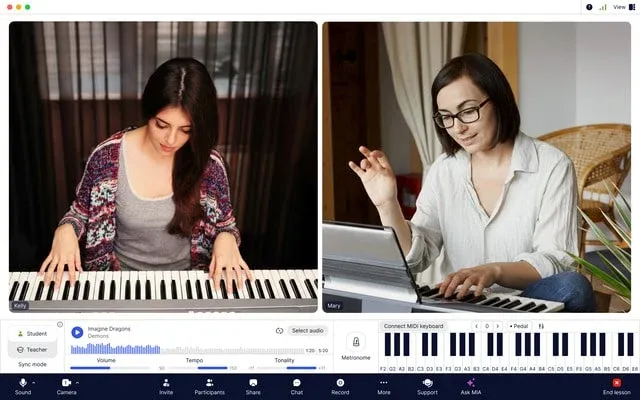
Interface ng MOOZ app — mga built-in na tool sa musika para sa online na mga aralin
Mga Pro Tip para sa Pagpaplano sa MOOZ: Gamitin ang Iyong Platform
Ang iyong online teaching platform ay ang iyong digital classroom. Ang MOOZ ay idinisenyo upang bigyang-buhay ang iyong pinakamahusay na mga lesson plan.
-
Gamitin ang mga Built-in Music Tools: Higit pa sa basic video calls. Planuhang gamitin ang integrated metronome nang direkta sa iyong tawag para sa rhythm drills. Gamitin ang high-quality audio player na nagbibigay-daan sa iyong baguhin ang tempo at key ng anumang backing track o accompaniment sa real-time — perpekto para sa pag-aayos ng play-along activities sa eksaktong antas ng iyong estudyante.
-
Lumikha gamit ang Studio-Grade Sound at Sync: Gamitin ang studio-grade audio sa Sync Mode para sa malapit-zero latency upang marinig ang isa't isa nang sabay.
-
Magpatugtog at Kumonekta: Magpatugtog sa built-in na virtual piano o ikonekta ang iyong MIDI keyboard agad para sa seamless, high-fidelity demonstrations.
-
Pre-Load at Ayusin: Ihanda ang lahat ng iyong materyales — sheet music PDFs, play-along videos, listening examples — sa iyong 2GB MOOZ library upang ibahagi sa isang click, na pinapanatiling seamless ang daloy ng aralin.
-
Makipag-ugnayan gamit ang Multi-View: Idisenyo ang iyong aralin upang gumamit ng hanggang 5 camera nang sabay-sabay. Ipakita ang iyong mukha para sa katiyakan, ang iyong mga kamay para sa teknik, at ang iyong screen para sa teorya — lahat nang hindi nagpapalit ng layout.
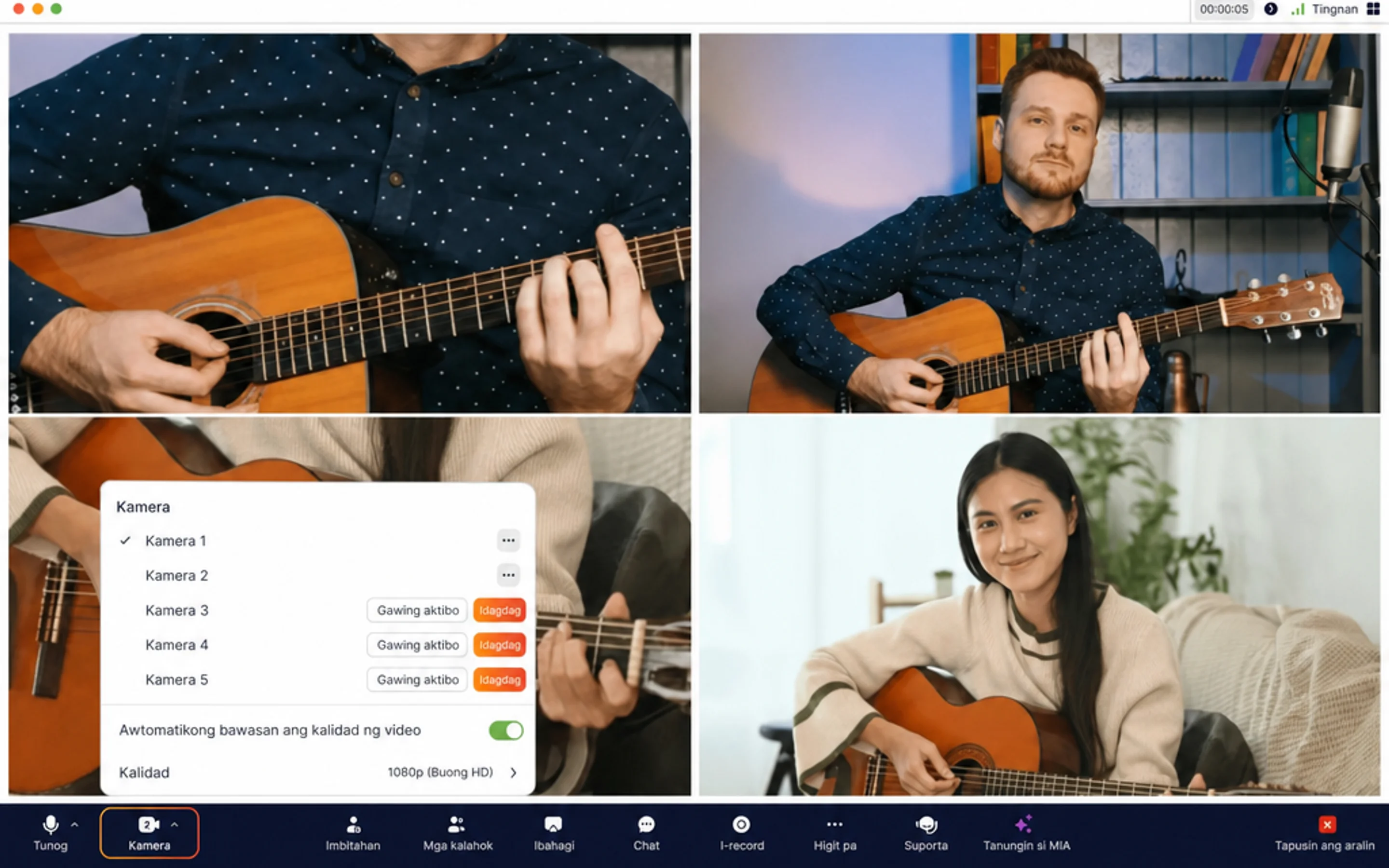
Multi-camera mode sa MOOZ
-
I-visualize ang Lahat: Magplano para sa live na interaksyon. Gamitin ang screen at file sharing features. Pagkatapos, i-activate ang annotation tools upang gumuhit ng bowings, bilugan ang mga paulit-ulit na pattern, i-highlight ang dynamics, o isulat ang fingerings nang direkta sa shared screen sa real-time — muling likhain ang pakiramdam ng personal, pencil-on-paper na pagtuturo.
-
Pre-Load at Ayusin: Alisin ang mga awkward pauses. Bago ang iyong aralin, i-upload ang lahat ng kinakailangang materyales — sheet music PDFs, listening excerpts, atbp. — sa iyong personal na 2GB MOOZ library. Ayusin ang mga folder ayon sa estudyante, paksa, o antas.
Sa pamamagitan ng pagpaplano gamit ang mga feature ng MOOZ, hindi sa paligid ng mga ito, binabago mo ang iyong online studio sa isang responsive, immersive, at lubos na epektibong music classroom.
Iyong Action Plan: Paano Magsimula Ngayon
Hindi mo kailangang magsimula mula sa simula. Gawin ang mga hakbang na ito:
-
Piliin ang Iyong Template sa Itaas: Piliin ang halimbawang plano na pinakamalapit sa iyong pagtuturo (preschool, elementary, o instrumental).
-
I-adapt Ito: Ilagay ang iyong partikular na kanta, teknik, o aktibidad para sa bawat bloke. Panatilihing mahigpit ang timing.
-
Subukan sa MOOZ: Patakbuhin ang iyong bagong plano sa iyong susunod na aralin. Gamitin ang mga tool ng platform ayon sa plano. Pansinin ang pinabuting daloy at pokus ng estudyante.
-
Systemize: Gumawa ng 2-3 variation ng planong ito na maaari mong i-rotate at gamitin muli para sa iba't ibang uri ng aralin. Ito ay magiging iyong reusable na "template library," na makakatipid sa iyo ng maraming oras ng lingguhang paghahanda.
Magplano nang Mas Kaunti, Magturo nang Higit Pa, Lumago nang Mas Mabilis
Sa 2026, ang isang mahusay na lesson plan ng musika ay iyong blueprint para sa tagumpay, ngunit ang tamang platform ay iyong construction crew. Ang MOOZ ay binuo ng mga musikero, para sa mga musikero upang malutas ang mga tunay na hamon ng online na pagtuturo ng musika.
Sa MOOZ, ang iyong maingat na binalak na micro-activities ay maayos na naglilipat salamat sa stable, low-latency connections. Ang iyong creative applications ay sumisikat gamit ang studio-quality sound. Ang iyong guided practice ay nagiging mas epektibo gamit ang crystal-clear audio na nagbibigay-daan sa iyong marinig ang bawat nuance ng teknik ng iyong estudyante.
Itigil ang pag-aangkop ng iyong pagtuturo sa generic na limitasyon ng video call. Simulan ang pagbuo ng iyong future-proof studio sa isang platform na idinisenyo para sa iyong sining.

Mga Kaugnay na Artikulo
Bago & Pagkatapos: Pinapalakas ng MOOZ Multi-Cam ang Online Guitar Classes
Alamin kung paano lubos na pinapataas ng MOOZ Multi-Cam system ang mga online na aralin sa gitara.
Ang Unang 30 Araw: Paano Suriin Kung Gumagana ang Iyong Online Music Lessons
Basahin ang hakbang-hakbang na gabay ng MOOZ sa pagsuri ng iyong online na aralin sa musika pagkatapos ng unang buwan.
Mga Guro ng Musika at Pamamahala ng Oras: Burnout ay Kanselado
Nalulunod sa mga plano sa aralin at admin? Tinutulungan ng gabay na ito ang mga guro ng musika na pangasiwaan ang kanilang iskedyul.