
Industry News
Online music education has come a long way in just a few years. What started as an emergency solution during the pandemic has turned into a confident, fast-growing digital industry. In 2026, teaching music online is no longer a backup plan — it’s a primary format for teachers building sustainable studios and for students who value flexibility, sound quality, and real human connection.
This shift is backed by data. According to Mordor Intelligence, the global online music education market is expected to grow from approximately USD 3.32 billion in 2025 to USD 3.79 billion in 2026, and continue expanding to USD 7.42 billion by 2031, with an average annual growth rate of about 14.35%. Learners are increasingly choosing platforms that go beyond basic video calls — ones that offer real-time interaction, adaptive learning, and tools designed specifically for music.
Below are the most important online music learning trends shaping this year — and how music teachers can practically apply them.
1. Immersive Learning with AR and VR Enters Real Classrooms
The trend
Augmented Reality (AR) and Virtual Reality (VR) are moving beyond experimental demos into practical teaching tools. Students can visualize finger placement on their instrument, explore orchestral layouts in 3D, or attend virtual masterclasses inside simulated concert halls.
Why it matters for teachers
Immersive environments are especially powerful for spatial learning — posture, hand position, fretboard navigation, and ensemble awareness. They also help fight practice fatigue by turning repetition into exploration.
Practical tip
Start small. Smartphone- or tablet-based AR apps are increasingly affordable and easy to integrate. Use immersive tools selectively — for example, as a weekly technique focus or a reward session to explain complex physical concepts.
2. Hyper-Personalization Through AI-Driven Feedback
The trend
Artificial intelligence has become a daily teaching assistant. Modern AI tools can analyze pitch accuracy, rhythm stability, timing, and even dynamics during student practice sessions.
Why it matters for teachers
AI reduces repetitive correction during live lessons. Instead of spending time identifying basic issues, teachers can focus on musical expression, interpretation, and long-term development.
Where this fits into live teaching
AI is most effective when paired with music-optimized platforms like MOOZ. With the in-app MOOZ Intelligent Assistant (MIA) supporting practice and feedback outside the lesson, live sessions can be fully dedicated to what matters most: listening closely, playing together in sync, and giving nuanced musical guidance that AI cannot replace.
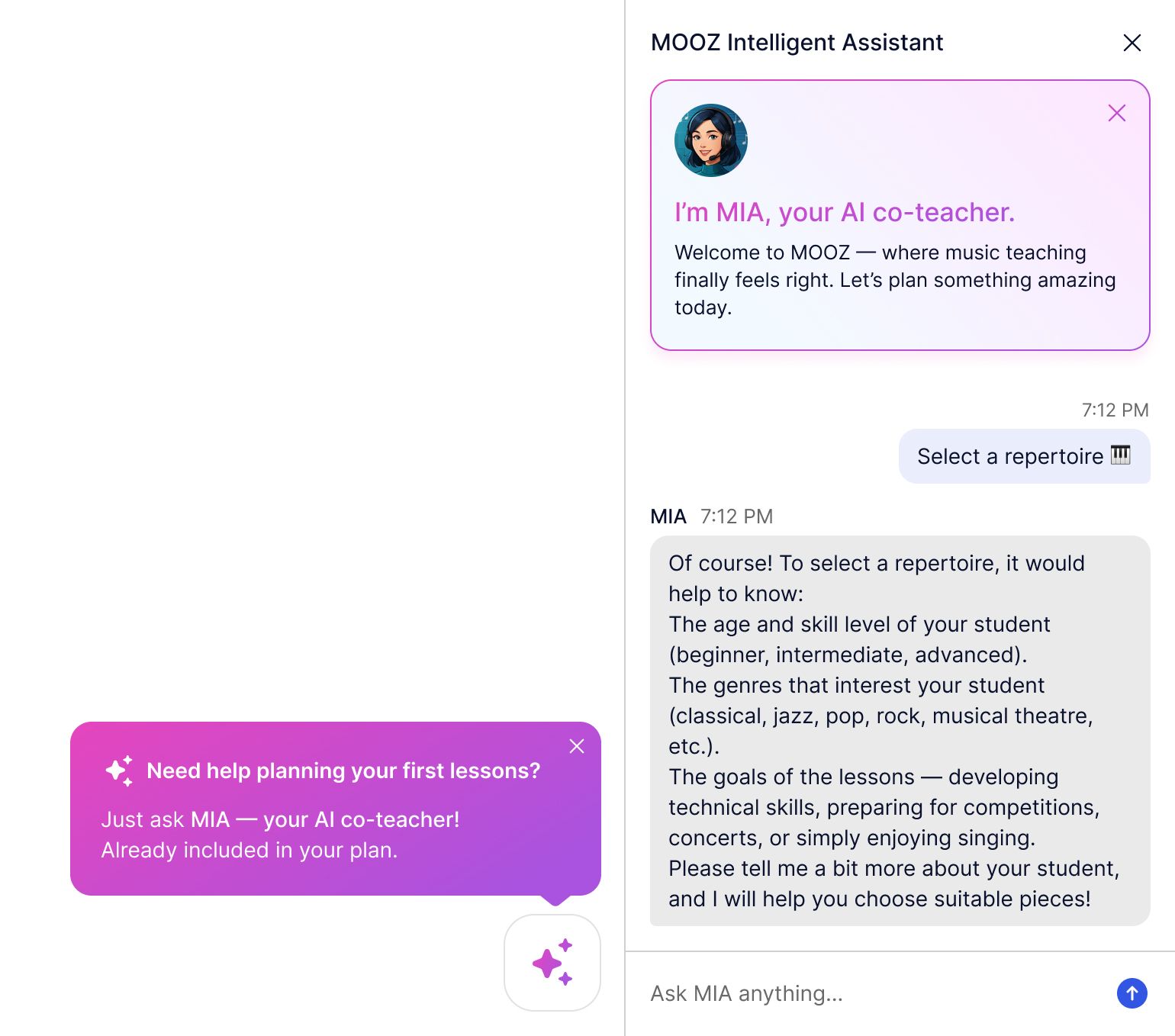
MOOZ Intelligent Assistant
Practical tip
Use AI intentionally. Assign MIA (already included in any MOOZ subscription) for specific practice goals — for example, rhythm accuracy or intonation — and review its feedback before the lesson. This allows you to structure each session around targeted improvements rather than general correction.
3. Hybrid Teaching Becomes the Dominant Model
The trend
The strict divide between online and in-person teaching is disappearing. In 2026, the most successful studios use hybrid models that combine live online lessons with occasional in-person workshops, intensives, or recitals.
Why it matters for teachers
Hybrid formats increase geographic reach while preserving the human connection many students value. They also allow more flexible scheduling and diversified pricing.
Where this shows up in practice
Teachers increasingly rely on platforms that support structured online lessons — for example, using MOOZ for weekly high-quality online instruction — while reserving in-person time for performances or deep technique sessions.
Practical tip
Package your offerings clearly: Online-Only, Hybrid Monthly (online lessons plus one in-person group session), and In-Person Intensive.
4. Micro-Learning and Niche Skill Platforms Gain Momentum
The trend
Students increasingly supplement regular lessons with short, focused courses on specific skills — rhythm styles, DAW techniques, sight-reading drills, or genre-specific articulation.
Why it matters for teachers
Micro-learning does not replace structured lessons. Instead, teachers become curators who guide students toward the right resources and help integrate those skills into broader musical development.
Practical tip
Create your own micro-content. Short videos or quick exercises shared between lessons reinforce learning and strengthen your authority as a teacher — while also supporting student motivation.
5. Community-First Learning and Group Engagement
The trend
One of the biggest challenges of online learning is isolation. In response, platforms and teachers are prioritizing community-based experiences: group challenges, virtual ensembles, peer feedback, and online recitals.
Why it matters for teachers
Community increases accountability, motivation, and long-term retention. Students who feel connected stay longer and practice more consistently.
Where this shows up in practice
Group lessons and collaborative formats are becoming easier to run online. MOOZ group mode is coming very soon!
Practical tip
Host monthly jam sessions or short peer performances at the end of lessons to strengthen community.

6. Integrated Music Production and Songwriting
The trend
Students want to do more than play — they want to compose, record, and produce music.
Why it matters for teachers
Teaching basic DAW skills (e.g., GarageBand, Soundtrap) helps students understand harmony, structure, and modern production workflows, adding relevance to instrument study.
Practical tip
Introduce a quarterly creative recording project where students produce a multi-track piece, reinforcing both performance and creative skills.
7. Music-Optimized Platforms Replace Generic Video Tools
The trend
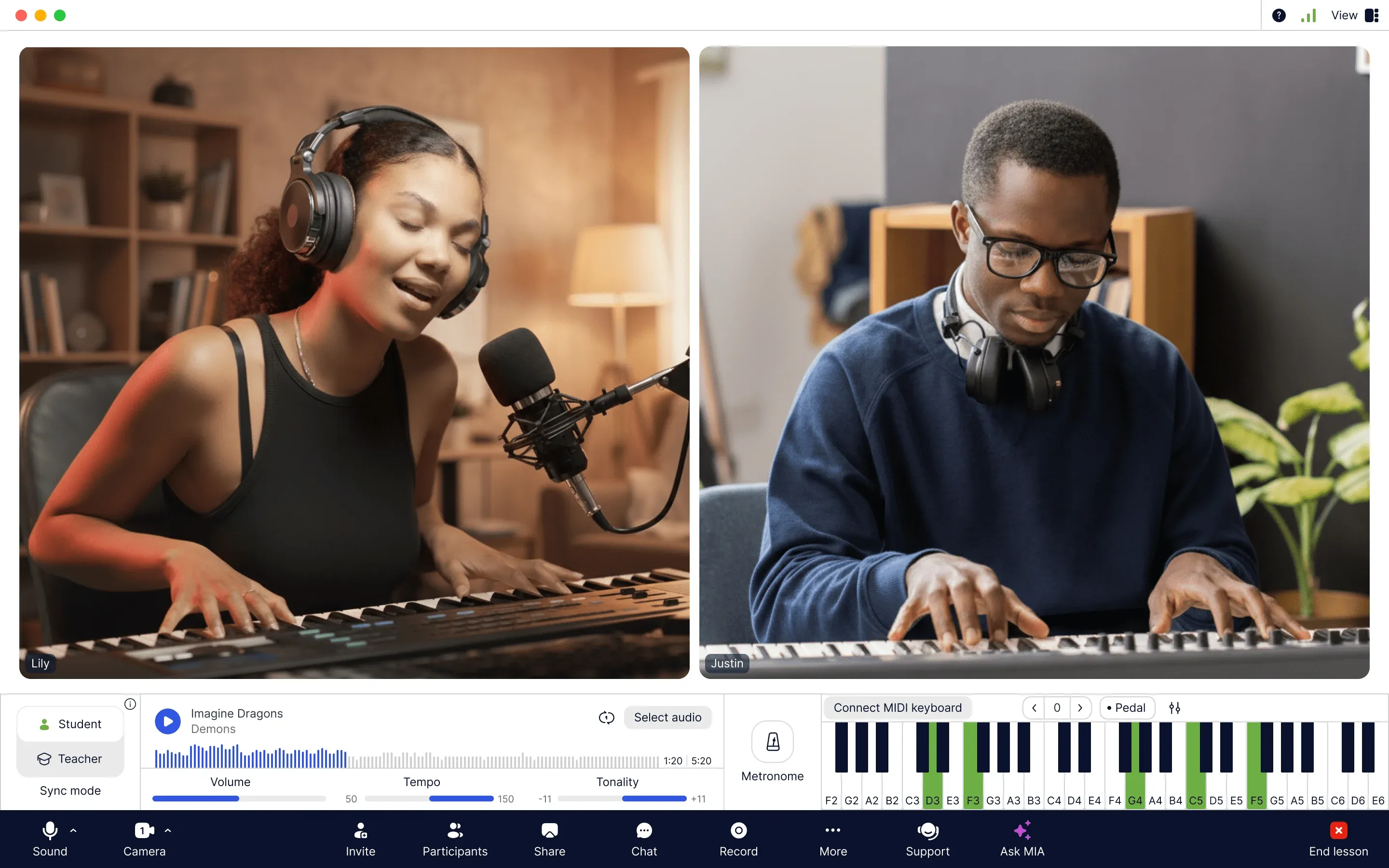
Generic video conferencing tools no longer suffice for nuanced music instruction. Teachers need much more: high-quality audio, low latency, synchronized playback, multi-camera support, built-in tools (metronome, shared files, virtual piano), and lesson recording.
Why it matters for teachers
Better sound and interaction quality lead to faster student progress. Teachers spend less time managing technical issues and more time teaching.
Where this shows up in practice
MOOZ is built specifically for music. It is designed around music teachers’ needs, helping them replicate in-person studio dynamics online.
8. Mobile-First Access with Multi-Device Learning
The trend
Mobile apps account for significant user engagement thanks to accessibility and reminders. At the same time, students move between desktop for lessons, tablet for study materials, and mobile for quick practice moments.
Why it matters for teachers
Platforms supporting seamless multi-device use increase student consistency and satisfaction.
Where this shows up in practice
MOOZ works across devices, so teachers and students can stay connected even on the go. An iPhone can also be seamlessly connected as a second camera, making it easy to show hand position, embouchure, or technique from another angle. While desktop remains the recommended setup for serious teaching and has a full music toolkit, mobile access can be a powerful backup — especially for students.
9. Data-Informed Teaching Decisions
The trend
Teachers increasingly use lesson analytics and practice data to understand what works.
Why it matters for teachers
Insights into practice patterns allow teachers to personalize instruction, adjust pacing, and improve retention — especially in online studios.
Practical tip
Review practice data before each lesson, not after problems appear. Look for drops in practice time, repeated mistakes, or skipped assignments. Use these signals to adjust tempo, simplify explanations, or change repertoire early — before motivation declines.
10. Online Teaching as a Sustainable, Global Business
The trend
Online music education continues to expand globally. While North America remains the largest market, Asia-Pacific is the fastest-growing region due to smartphone adoption and rising demand for flexible learning.
Why it matters for teachers
Online teaching is no longer a temporary solution; subscription models, bundled offerings, and integrated scheduling and payments allow teachers to scale their studios sustainably.
Practical tip
Move from single-lesson pricing to clear monthly packages. Combine live lessons, recordings, group sessions, and feedback into structured plans. This makes your offer easier to understand for international students and creates predictable, sustainable income for your studio.
How to Implement These Trends in Your Studio (2026 Checklist)
☑️ Choose intentionally: Pick one or two trends that align with your students and teaching style.
☑️ Simplify your tech stack: Use a few reliable tools instead of many disconnected ones.
☑️ Upskill gradually: Dedicate short regular blocks to learning new features or platforms.
☑️ Communicate value: Explain how new tools improve learning outcomes.
☑️ Collect feedback: Student input helps refine your approach quickly.
Technology Supports the Human Core
The defining theme of online music learning in 2026 is not automation — it is intentional design. Technology works best when it amplifies the human elements of teaching: mentorship, motivation, creativity, and connection.
Teachers who adopt new tools thoughtfully, build engaging learning systems, and keep musical joy at the center of their practice will thrive in this evolving digital landscape.
About MOOZ
MOOZ is a music-first online teaching platform built specifically for music and vocal lessons. Unlike generic video tools, MOOZ is optimized for high-quality musical sound and real interaction between teacher and student.
With features like Sync Mode, built-in music tools (metronome, virtual piano, audio player), multi-camera support, group lessons, and MOOZ AI (MIA) for practice and feedback, MOOZ helps teachers run more effective lessons and build sustainable online studios.
MOOZ is used by music teachers worldwide to teach students of all levels — without sacrificing sound quality, connection, or musical nuance.
Teach Music Online — Without Compromise
Experience a platform designed for music, not meetings.

Related Articles
Synchronization in Online Music Lessons: A Complete Breakdown
Learn how tech fixes internet latency. Make synchronous music today!
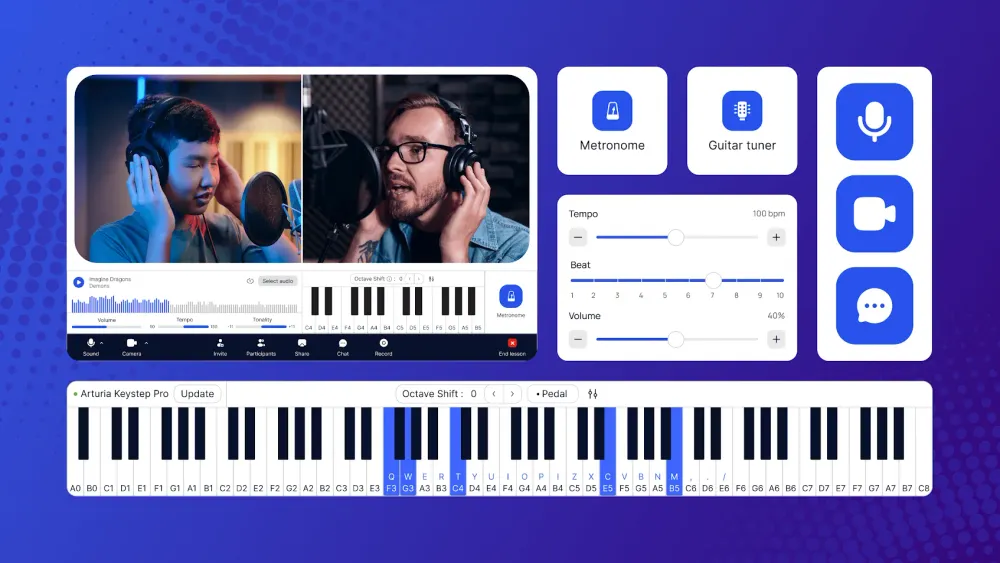
How to Start Your First Lesson in MOOZ: A Step-by-Step Guide
Read MOOZ step-by-step guide to make your first class smooth, professional, and perfectly in tune.
Guide to Teach Music Online Smarter: MOOZ & Moosiko Insights
Learn how to solve the 5 biggest online teaching challenges that are costing you time and students.