
Teacher’s Toolbox
Search queries like "music teacher vacancy," "music education jobs," and "music teacher jobs near me" are more competitive than ever. At the same time, thousands of teachers are quietly leaving marketplaces that take 20–40% of their income.
What’s replacing them? 👉 A strong personal brand.
This guide is your system to transition from seeking music teacher employment to becoming the go-to expert students find directly.
Part 1: Music Teacher Personal Branding: Your Key to Better Music Instructor Jobs
Before you apply for music teacher employment or post your first reel, you need a foundation. Your brand is what makes you stand out in searches for music ed jobs or online music teacher roles.
Your personal brand is not:
- A logo.
- Just a fancy music teacher website.
- “Posting sometimes on Instagram.”
Your personal brand is:
- Who you help and what result you achieve for them.
- Why students trust you over other teachers.
- Your unique teaching position in a crowded market.
It directly affects:
- The quality of your music teacher positions and online music lessons.
- The kind of students you attract (motivated vs. price-shoppers).
- Your ability to move beyond "piano teachers wanted" listings.
From Music Teacher Vacancy to Unique Value Proposition
Before you hit "apply" or post your first reel, define your brand's core. This makes you stand out in both music instructor jobs applications and direct-to-student marketing.
-
Your Niche is Your Magnet: "A music teacher" is too broad. Are you "The Online Piano Teacher for Adult Beginners" or "The Vocal Coach Helping Teens Prepare for Auditions"? Specificity attracts your ideal student.
-
Craft Your Teacher's Mission: This isn't corporate fluff. It's your guiding star for content and communication. (e.g., "To demystify music theory and make songwriting accessible to everyone.").
-
Professional Basecamp: Your music teacher website is non-negotiable. It's your application portfolio, booking hub, and credibility anchor. Ensure it clearly states what you teach, who it's for, and how to start.
Why a Personal Brand Beats Marketplaces & Job Boards
Marketplaces promise:
- visibility
- easy music teacher positions
- steady leads
But they cost you:
- up to 40% of income
- control over pricing
- ownership of students
A personal brand lets you:
- keep up to 100% of earnings
- teach globally via online music education
- grow beyond “piano teachers wanted” listings
Part 2: Social Media for Music Teachers: The 4-Step System to Build Your Brand

Step 1: Define Your Clear Teaching Position (This is Critical)
This is where most teachers fail. Clarity is your greatest asset.
- Instead of: "I offer piano lessons."
- Use: "Helping adult beginners play their first song confidently in 30 days."
- Or: "Online violin teacher for dedicated teens preparing for auditions."
Why it works: Clear positioning helps you rank on music teacher websites, attract the right students in search of online music classes, and stand out in any music teacher employment application.
Step 2: Turn Instagram & TikTok Into Your 24/7 Student Funnel
You don’t need 10,000 followers. You need the right 50 people actively looking for lessons.
1. Optimize Your Profile (The Non-Negotiables):
- Bio: State who you help and the result. "Helping guitarists nail their first solo 🎸 | Online Worldwide | DM 'PLAY' for a free tip!"
- Link: Direct link to your booking page or music teacher website.
- Visuals: Use a friendly, professional photo of you teaching.
2. Post What Students ACTUALLY Want to See:
You need to upgrade your content strategy for online music education promotion. Stop posting “Available for lessons.” Start posting value:
- Quick Fix Videos: "The 60-second fix for buzzing barre chords."
- Micro-Tutorials: Breakdown the chorus of a popular song.
- Student Progress Snippets: "3 months of progress → hear the difference!" (with permission).
- "Myth vs. Fact": Debunk common practice myths.
3. Smart Hashtag Strategy:
- Niche & Location: #OnlinePianoTeacher #NYCVoiceCoach #GuitarLessonsOnline
- Problem/Solution: #LearnPianoFast #SingingTipsForBeginners
- Avoid: Overcrowded tags like #Music where you'll get lost.
Step 3: Smart Outreach That Builds Trust (Not Spam)
Cold DMs don’t fail because they’re DMs. They fail because they’re generic. Your outreach should reflect your brand as a helpful expert.
The "Warm DM" Formula:
Greeting + Personalization + Value Offer (No Ask)
Copy-Paste Templates to Adapt
After Someone Posts a Cover:
"Hey [Name]! Loved your take on [Song]. The emotion in the chorus was great! I actually have a quick tip for smoothing out the verse transition — want me to send it over?"
To Someone Asking for Advice in a Group:
"Hi [Name]! Saw your question about [problem, e.g., barre chords] in [Group Name]. That's a super common hurdle! I made a short video breaking down the fix. Happy to share the link if you'd like?"
Following a Local Hashtag:
"Hi [Name]! Noticed you're in [City] and learning piano. The local music scene here is great! I just shared a practice hack for busy schedules on my page—thought it might be useful for you. Keep up the great work!"
Where to Find Potential Students:
- Facebook/Reddit: Groups like "[Your City] Musicians" or "r/pianolearning".
- YouTube Comments: Offer genuine advice on popular tutorial videos for your instrument.
- Social Media: Use niche hashtags and engage with content from intermediate learners.
Key Mindset: You are the helpful expert, not a salesperson. Provide value first, build trust, and they will come to you for lessons.
Step 4: Professionalize Your Operation with the Right Tools
Your music teaching tools are part of your brand. Teaching on a generic video app signals "this is a hobby." Using a professional online music teaching platform signals quality and seriousness.
Essential Toolkit for the Modern Teacher:
- Online Music Teaching Platform: Use a platform like MOOZ built for music education. It offers studio-quality audio (no cut-off frequencies), built-in music tools like metronome, piano, sync player, 5 cameras, and shared notation. It's designed for teaching music, not just talking.
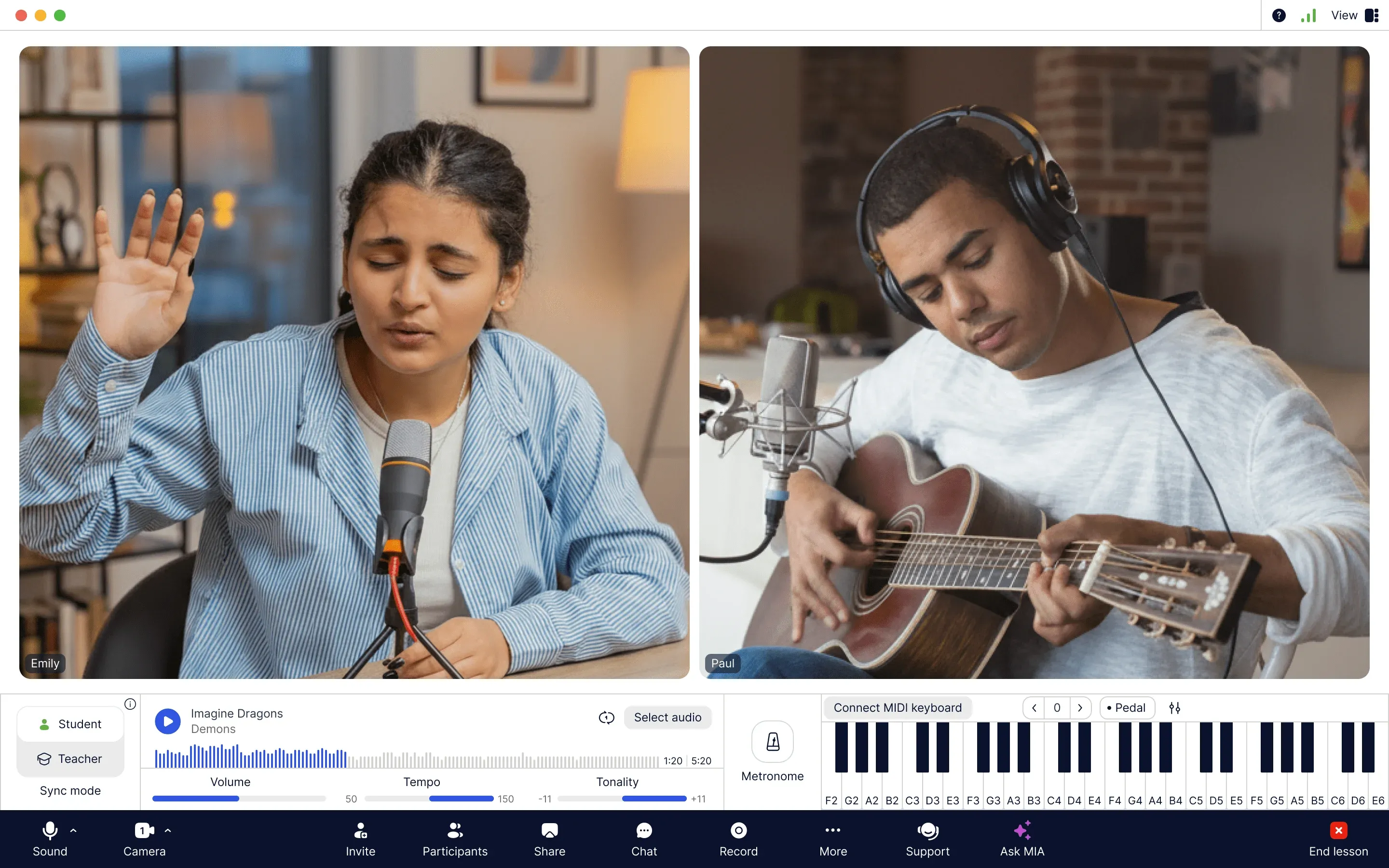
MOOZ app interface
- Scheduling & Payments: Use Calendly (scheduling) + Stripe/Square (payments) or an all-in-one like Music Teacher's Helper. Automate invoices and reminders.
- Your Website: Your central hub. It should clearly explain your teaching, display testimonials, and allow easy booking.
- Must-Have Legal: A simple contract (scope, payment terms, cancellation policy) and parental consent form (for minors). A basic studio policy protects your time and income.
- Separation of Finances: Open a separate business bank account. Track income/expenses with a simple spreadsheet or QuickBooks.
This is the "nobody taught us in music school" part that makes your brand a sustainable business.
Conclusion: From Music Teacher Vacancy to Fully-Booked Music Education Expert
A strong personal brand transforms your search for music teacher positions into a thriving practice. By defining your niche, mastering your music teacher website and social media, and using professional music teaching tools, you build a sustainable career on your own terms.
Your Music Teacher Personal Branding Checklist
- DEFINE your niche (e.g., Online Piano Teacher for X).
- OPTIMIZE your music teacher website and social profiles.
- CREATE one "Quick Fix" video this week.
- REACH OUT with 3 personalized DMs.
- SYSTEMIZE with booking links and a professional online music teaching platform.
Ready to teach with professional tools and keep 100% of your earnings? Start building your independent teaching brand today. Use MOOZ to impresses students from the first lesson.

Related Articles

Synchronization in Online Music Lessons: A Complete Breakdown
Learn how tech fixes internet latency. Make synchronous music today!
How to Start Your First Lesson in MOOZ: A Step-by-Step Guide
Read MOOZ step-by-step guide to make your first class smooth, professional, and perfectly in tune.
Guide to Teach Music Online Smarter: MOOZ & Moosiko Insights
Learn how to solve the 5 biggest online teaching challenges that are costing you time and students.