
Lesson Lab
The violin has a reputation for being slow to start. Some of that is fair: there are no frets, so you have to find every note yourself. But the part nobody mentions is that four of your notes are free. The open strings need no fingers at all, and two of the tunes below use almost nothing else.
This guide gives you 15 easy violin songs for beginners, sorted from a single string upward. Every one comes with finger numbers, the note names, and the specific thing that makes it sound right rather than scratchy. They all stay in first position, and they all use the same hand shape, so you are learning one thing fifteen times rather than fifteen separate things.
Never held a violin before? How to play the violin covers size, tuning, posture and the bow hold, which is the half-hour of groundwork that makes everything below sound like music instead of a scrape. Then come back here for something to play.
How to read the finger numbers
Four lines, four strings. The top line is the E string, the thin one that sounds highest. The bottom is the G string, the thick one. A number on a line tells you which finger to put down, and this is the part that catches out anyone coming from guitar: the numbers are fingers, not frets. A 1 means your index finger, a 4 means your little finger, and a 0 means play the string open with no finger at all.
👩🏫🎻 On violin, a teacher hears in ten seconds what a mirror never shows you. Get MOOZ and take your first violin lesson →.
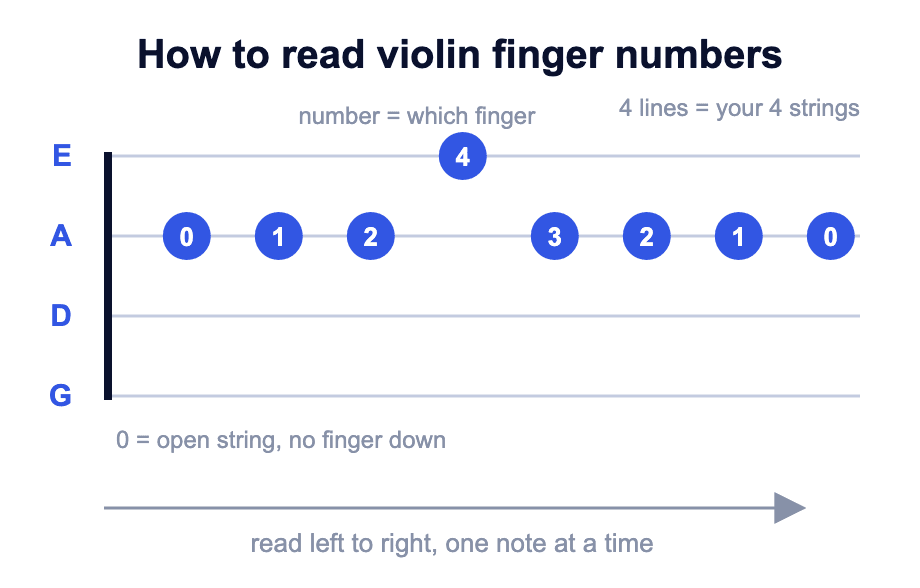
How to read violin finger numbers
Read left to right, one note at a time. Each tune is broken into short stacked lines, one per musical phrase, the way sheet music wraps.
The one hand shape you need
Every tune here sits in first position with what teachers call a high second finger. Your fingers land in the same relative spots on each string, so once your hand knows the shape, moving between strings is just moving your arm.
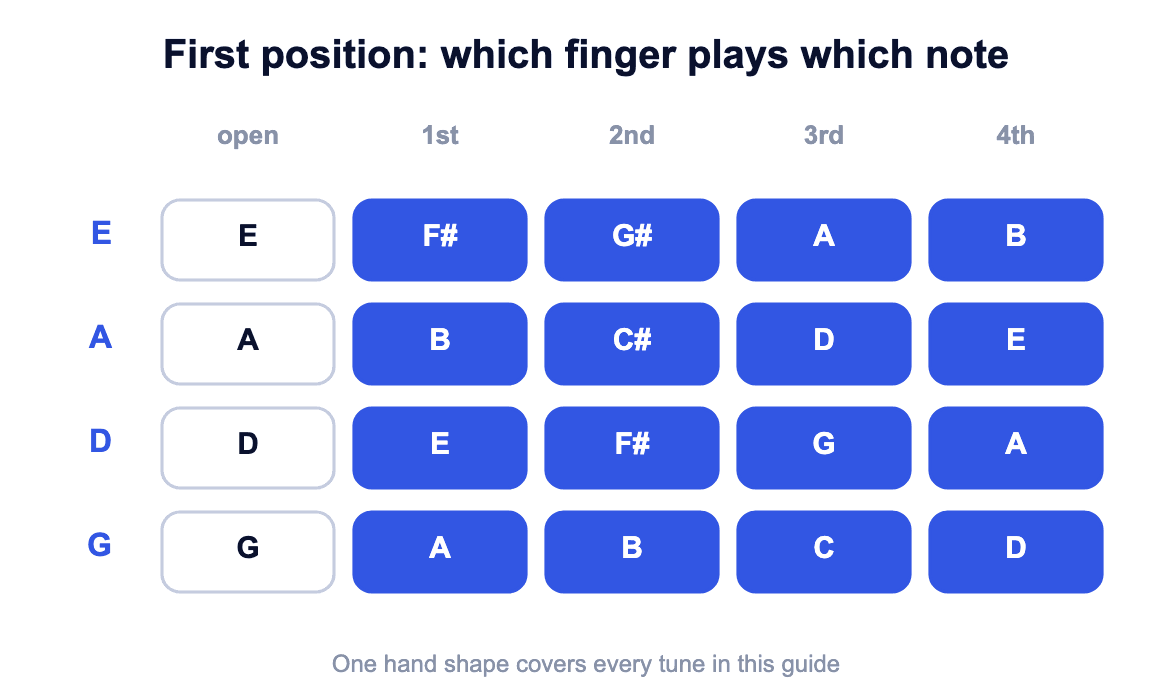
Violin first position finger chart
If you have tapes on your fingerboard, these are the notes they mark. If you don't, put your first finger a comfortable stretch from the nut and let your ear correct you. Playing slightly out of tune and noticing it is how intonation gets built.
Start here: one string, no string crossing
1. Hot Cross Buns
Three notes, one string, and your whole attention free for the bow. Keep the bow parallel to the bridge and use the middle third of it. A scratch means you are pressing too hard, a whistle means you have drifted over the fingerboard.
E|-----------------|
A|-2-1-0-----------|
D|-----------------|
G|-----------------|

E|-----------------|
A|-2-1-0-----------|
D|-----------------|
G|-----------------|

E|-----------------|
A|-0-0-0-0-1-1-1-1-|
D|-----------------|
G|-----------------|

E|-----------------|
A|-2-1-0-----------|
D|-----------------|
G|-----------------|
Notes: C# B A, C# B A, A A A A B B B B, C# B A
2. Mary Had a Little Lamb
Still one string, but now the fingers move while the bow keeps going. Put all three fingers down at the start of a phrase and lift them one at a time instead of placing each one from scratch. Less work, better tuning.
E|---------------------------|
A|-2-1-0-1-2-2-2-------------|
D|---------------------------|
G|---------------------------|

E|---------------------------|
A|-1-1-1---------------------|
D|---------------------------|
G|---------------------------|

E|---0-0---------------------|
A|-2-------------------------|
D|---------------------------|
G|---------------------------|

E|---------------------------|
A|-2-1-0-1-2-2-2-2-1-1-2-1-0-|
D|---------------------------|
G|---------------------------|
Notes: C# B A B C# C# C#, B B B, C# E E, C# B A B C# C# C# C# B B C# B A
3. Twinkle Twinkle Little Star
The first tune that crosses strings, and the reason it appears in nearly every beginner method book. The crossing is a small tilt of the whole arm from the shoulder, not a flick of the wrist. If the two strings sound at once, your arm has stopped halfway between levels.
E|-----0-0-1-1-0-|
A|-0-0-----------|
D|---------------|
G|---------------|

E|---------------|
A|-3-3-2-2-1-1-0-|
D|---------------|
G|---------------|

E|-0-0-----------|
A|-----3-3-2-2-1-|
D|---------------|
G|---------------|

E|-0-0-----------|
A|-----3-3-2-2-1-|
D|---------------|
G|---------------|

E|-----0-0-1-1-0-|
A|-0-0-----------|
D|---------------|
G|---------------|

E|---------------|
A|-3-3-2-2-1-1-0-|
D|---------------|
G|---------------|
Notes: A A E E F# F# E, D D C# C# B B A, E E D D C# C# B (twice), then the first two lines again
4. Lightly Row
This one walks your fingers up in order, A B C# D, which is the cleanest possible test of hand shape. Keep the fingers you are not using hovering just above the string instead of flying off into the air.
E|-0-------------|
A|---2-2-3-1-1---|
D|---------------|
G|---------------|

E|---------0-0-0-|
A|-0-1-2-3-------|
D|---------------|
G|---------------|

E|-0-------------|
A|---2-2-3-1-1---|
D|---------------|
G|---------------|

E|-----0-0-------|
A|-0-2-----2-----|
D|---------------|
G|---------------|
Notes: E C# C# D B B, A B C# D E E E, E C# C# D B B, A C# E E C#
5. Row, Row, Row Your Boat
The third phrase jumps to the top of the E string and sits there, which means aiming your hand before the bow arrives rather than hunting once it does. Look ahead one phrase while you play.
E|-------------------------|
A|-0-0-0-1-2---------------|
D|-------------------------|
G|-------------------------|

E|---------0---------------|
A|-2-1-2-3-----------------|
D|-------------------------|
G|-------------------------|

E|-3-3-3-0-0-0-------------|
A|-------------2-2-2-0-0-0-|
D|-------------------------|
G|-------------------------|

E|-0-----------------------|
A|---3-2-1-0---------------|
D|-------------------------|
G|-------------------------|
Notes: A A A B C#, C# B C# D E, A A A E E E C# C# C# A A A, E D C# B A
👩🏫🎻 Scratchy tone, or not sure your bow is straight? Get MOOZ and take your first violin lesson →.
Next: crossing strings both ways
6. London Bridge Is Falling Down
Back and forth over the same crossing, over and over. That repetition is the point: it turns the arm movement into something automatic instead of something you think about.
E|-0-1-0-------0-|
A|-------3-2-3---|
D|---------------|
G|---------------|

E|---------------|
A|-1-2-3---------|
D|---------------|
G|---------------|

E|-----0---------|
A|-2-3-----------|
D|---------------|
G|---------------|

E|-0-1-0-------0-|
A|-------3-2-3---|
D|---------------|
G|---------------|

E|---0-----------|
A|-1---2-0-------|
D|---------------|
G|---------------|
Notes: E F# E D C# D E, B C# D, C# D E, E F# E D C# D E, B E C# A
7. Frère Jacques
The first tune that reaches down to the D string. Going down is harder than going up, because gravity helps you overshoot. The arm drops, the wrist stays quiet.
E|-------------|
A|-0-1-2-0-----|
D|-------------|
G|-------------|

E|-------------|
A|-0-1-2-0-----|
D|-------------|
G|-------------|

E|-----0-------|
A|-2-3---------|
D|-------------|
G|-------------|

E|-----0-------|
A|-2-3---------|
D|-------------|
G|-------------|

E|-0-1-0-------|
A|-------3-2-0-|
D|-------------|
G|-------------|

E|-0-1-0-------|
A|-------3-2-0-|
D|-------------|
G|-------------|

E|-------------|
A|-0---0-------|
D|---1---------|
G|-------------|

E|-------------|
A|-0---0-------|
D|---1---------|
G|-------------|
Notes: A B C# A (twice), C# D E (twice), E F# E D C# A (twice), A E A (twice)
8. Ode to Joy
The tune everyone recognises within two notes, which makes it brutally honest about intonation. Play it slowly and give every note the same amount of bow. Uneven bow is what makes a beginner sound like a beginner, more than wrong notes do.
E|-------0-0-------|
A|-2-2-3-----3-2-1-|
D|-----------------|
G|-----------------|

E|-----------------|
A|-0-0-1-2-2-1-1---|
D|-----------------|
G|-----------------|

E|-------0-0-------|
A|-2-2-3-----3-2-1-|
D|-----------------|
G|-----------------|

E|-----------------|
A|-0-0-1-2-1-0-0---|
D|-----------------|
G|-----------------|
Notes: C# C# D E E D C# B, A A B C# C# B B, then the same with A A B C# B A A to finish
9. When the Saints Go Marching In
Short, separate, confident strokes near the middle of the bow. Stop the bow between notes rather than smoothing them together. The gap is the march.
E|-------0-0---------|
A|-0-2-3-----2-0-1-0-|
D|-------------------|
G|-------------------|

E|-------0-0---------|
A|-0-2-3-----2-0-1-0-|
D|-------------------|
G|-------------------|

E|-------------0-0---|
A|-2-2-1-0-0-2-------|
D|-------------------|
G|-------------------|

E|-0-----------------|
A|---2-0-1-0---------|
D|-------------------|
G|-------------------|
Notes: A C# D E E C# A B A (twice), C# C# B A A C# E E, E C# A B A
10. Oh Susanna
A bouncy one, and the first here where rhythm carries more of the tune than pitch does. Tap the beat with your foot before you pick up the bow, then keep tapping while you play.
E|-------0-0-1-0---|
A|-0-1-2---------2-|
D|-----------------|
G|-----------------|

E|-----------------|
A|-0-1-2-2-1-0-1---|
D|-----------------|
G|-----------------|

E|-------0-0-1-0---|
A|-0-1-2---------2-|
D|-----------------|
G|-----------------|

E|-----------------|
A|-0-1-2-2-1-1-0---|
D|-----------------|
G|-----------------|
Notes: A B C# E E F# E C#, A B C# C# B A B, then the same with A B C# C# B B A to finish
11. Jingle Bells
Six identical notes in a row is a bow exercise wearing a carol as a disguise. Give every one the same length of bow and end each in the same place. If your bow creeps toward the tip, you are using more on the down than the up.
E|-----------------|
A|-2-2-2-2-2-2-----|
D|-----------------|
G|-----------------|

E|---0-------------|
A|-2---0-1-2-------|
D|-----------------|
G|-----------------|

E|-----------------|
A|-3-3-3-3-3-2-2-2-|
D|-----------------|
G|-----------------|

E|-----------0-----|
A|-2-1-1-2-1-------|
D|-----------------|
G|-----------------|
Notes: C# C# C#, C# C# C#, C# E A B C#, D D D D D C# C# C#, C# B B C# B E
Slower tunes that ask for a longer bow
12. Silent Night
Everything here lives on the E string, which frees you to think about nothing but bow speed. Count in three and use long, slow strokes. Running out of bow halfway through a note is the most common mistake, so start each long note near the frog.
E|-0-1-0-----|
A|-------2---|
D|-----------|
G|-----------|

E|-0-1-0-----|
A|-------2---|
D|-----------|
G|-----------|

E|-4-4-2-----|
A|-----------|
D|-----------|
G|-----------|

E|-3-3-0-----|
A|-----------|
D|-----------|
G|-----------|

E|-1-1-3-2-1-|
A|-----------|
D|-----------|
G|-----------|

E|-1-1-3-2-1-|
A|-----------|
D|-----------|
G|-----------|
Notes: E F# E C# (twice), B B G#, A A E, F# F# A G# F# (twice)
13. Amazing Grace
Three strings now, and the first tune that really rewards patience. Count in three and let the long notes actually last their full length. Rushing is the single most common way to make this one sound wrong.
E|-------------------|
A|---0-2-0-2-1-0-----|
D|-1-------------2-1-|
G|-------------------|

E|-------------------|
A|---0-2-0-2-1-3-----|
D|-1-----------------|
G|-------------------|

E|---0---------------|
A|-3---3-2-0-2-0-----|
D|---------------2-1-|
G|-------------------|

E|-------------------|
A|---0-2-0-2-1-0-----|
D|-1-----------------|
G|-------------------|
Notes: E A C# A C# B A F# E, E A C# A C# B D, D E D C# A C# A F# E, E A C# A C# B A
14. Auld Lang Syne
Lean gently on the first note of each group of three. That small accent is the whole difference between a waltz and a list of notes played in order.
E|-----------------|
A|---0-0-2-1-2-0-2-|
D|-1---------------|
G|-----------------|

E|-0-1-0-----------|
A|-------2-2-1-0---|
D|---------------1-|
G|-----------------|

E|-----------------|
A|---0-0-2-1-2-0-2-|
D|-1---------------|
G|-----------------|

E|-0-1-0-----------|
A|-------2-1-0-0---|
D|-----------------|
G|-----------------|
Notes: E A A C# B C# A C#, E F# E C# C# B A E, then the same pair to finish
15. Canon in D
A descending scale that walks from the A string down onto the D. It is also the best intonation check on this list: record it on your phone and listen back for the G. If any note is going to be flat, it is that one.
E|-----------------|
A|-3-2-1-0-------0-|
D|---------3-2-3---|
G|-----------------|

E|-----------------|
A|-3-2-1-0-------0-|
D|---------3-2-3---|
G|-----------------|
Notes: D C# B A G F# G A, repeated
FAQ: easy violin songs for beginners
What are the easiest violin songs for a beginner?
Hot Cross Buns and Mary Had a Little Lamb, because they stay on one string and leave your attention free for the bow. Twinkle Twinkle Little Star is the usual next step, since it introduces string crossing without changing anything else.
Do I need to read sheet music to play the violin?
Not to start. Finger numbers and note names will carry you through every tune here. Reading notation becomes worth learning once you want music nobody has written out in numbers for you.
What do the numbers mean in violin music?
They are fingers, not positions on the string. A 1 is your index finger, 4 is your little finger, and 0 means the open string with no finger down. This trips up guitarists, where the same numbers mean frets.
How long before I can play a recognizable tune?
Most beginners get Hot Cross Buns sounding like itself within a few days, and Twinkle Twinkle inside two or three weeks. The notes come faster than the tone does, which is normal.
Why does my violin scratch or squeak?
Almost always bow pressure, bow speed, or distance from the bridge. Too much pressure scratches, too little makes it whistle, and drifting over the fingerboard makes it thin and glassy. A teacher fixes this in one lesson.
Get live feedback from a violin teacher
Violin is the instrument where watching yourself in a mirror only gets you so far. Bow angle, wrist tension, a collapsed left hand, a shoulder creeping up toward your ear: these are the things that quietly become habits, and you are the last person who will notice them.
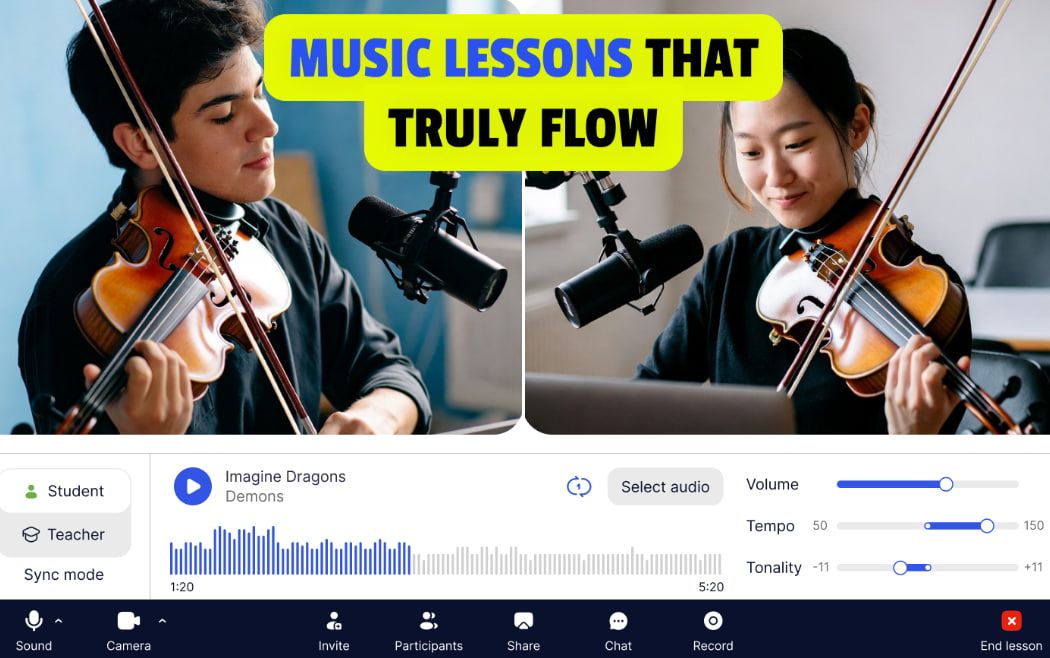
A live online violin lesson on MOOZ, with a clear view of the bow and both hands
If you are learning online, an ordinary video call fights you. It compresses the sound, drops the overtones that tell a teacher whether your tone is healthy, and gives you one fixed camera angle. A tool built for music keeps the audio clean and shows both hands at once, with a metronome and tuner already in the window. You can get MOOZ and take your first violin lesson.
Next steps
- Play Hot Cross Buns today, all on the A string, and watch the bow rather than your fingers.
- Add Twinkle Twinkle once the bow stays straight. That is your first string crossing.
- Start reading the notes behind the numbers. Violin notes for beginners covers the staff, the four open-string anchors and a ten-minute daily drill.
- Get MOOZ and take your first violin lesson and ask them to check your bow hold before anything else.
Fifteen tunes, one hand shape, one position. Work down the list in order and each one teaches you the thing the next one needs.

Browse verified violin teachers on MOOZ and filter by country and style
Related Articles

Before & After: MOOZ Multi-Cam Boosts Online Guitar Classes
Learn how MOOZ Multi-Cam system dramatically elevates online guitar lessons.
The First 30 Days: How to Check Your Online Music Lessons Work
Read MOOZ's step-by-step guide to checking your online music lessons after the first month.
Music Teachers and Time Management: Burnout Cancelled
Drowning in lesson plans and admin? This guide helps music teachers master their schedule.